

In this edition of The Weekly Alpha
🔎 What has already pumped, and the trades I’d still investigate
💧 A stock-token LP with measurable turnover and deeper liquidity
🏦 USDG Earn as a place to wait
🧐 Onchain Analytics
📚 This Week’s Intel and two YouTube Podcast Picks
Hello everyone,
UNI is up nearly 45% this week. ARB has done even better. I’m still watching UNI, but I’d want fees to hold while its price cools off.
For trading income, I’d investigate SPY/USDG. PONS needs its burns checked, while AERO offers a fee position on Base. Here’s what would get me interested, and what would make me pass.
What Has Already Moved
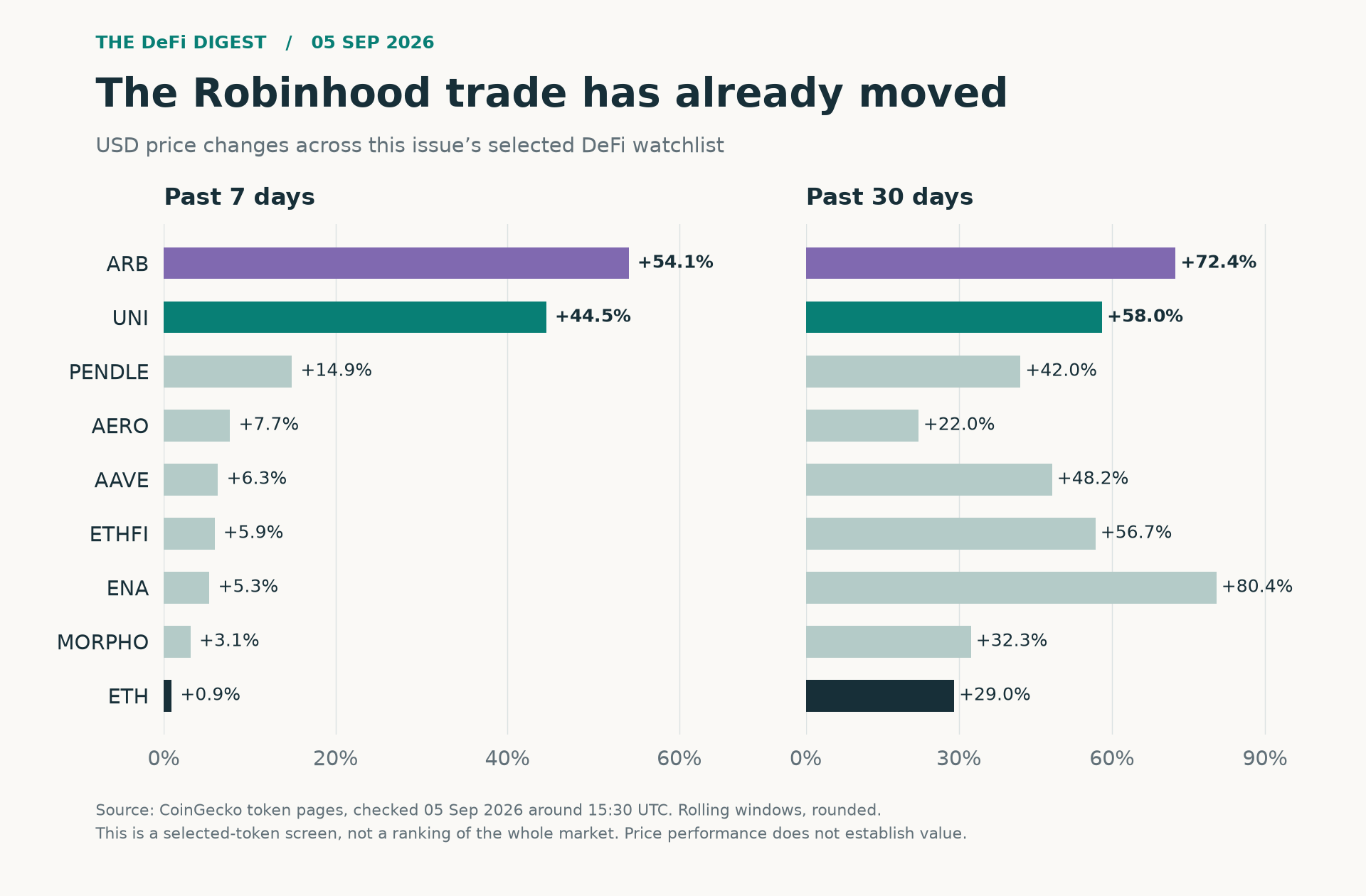
ARB gained 54.1% over seven days and UNI 44.5%, against ETH’s 0.9%. ENA leads this selected screen over 30 days.
UNI Is My First Token Watch
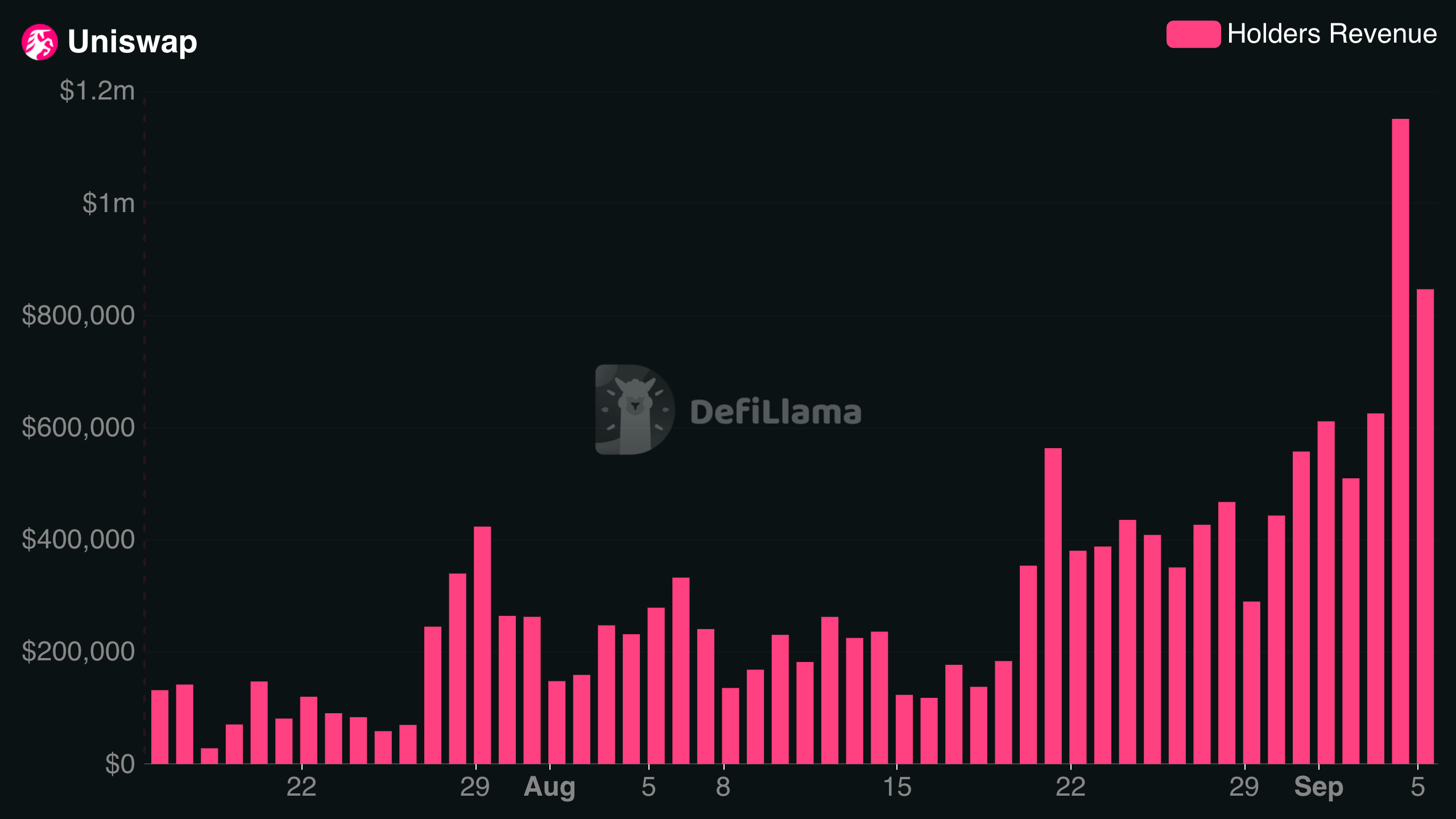
DeFiLlama attributes $2.99M of seven-day Uniswap holder revenue to Robinhood Chain, out of $4.19M across Uniswap. Over 30 days, Robinhood contributed $5.64M of $10.71M. Robinhood data
The mechanism is live: accumulated protocol fees can be claimed in exchange for burning UNI. Holding UNI gives exposure to that supply reduction, without a cash distribution. Executed governance proposal
At roughly $6.33 and a $3.95B market cap, I’d wait for a pullback or sideways trading while Robinhood-origin holder revenue holds near its $2.99M weekly baseline. Falling fees and a rising valuation would weaken the setup.
The next test comes after September 29, when the promotion covering certain Robinhood Wallet swap fees is scheduled to end. A full week of retained activity would strengthen the thesis. Promotion terms
ARB ranks lower for me. Its revenue route benefits the ecosystem and DAO treasury, without an automatic holder payout. After a 54% weekly rally, I’d watch the September 16 unlock and subsequent revenue retention before entering. Arbitrum economics · Supply schedule
PONS Has My Attention, but I Want the Burns Reconciled
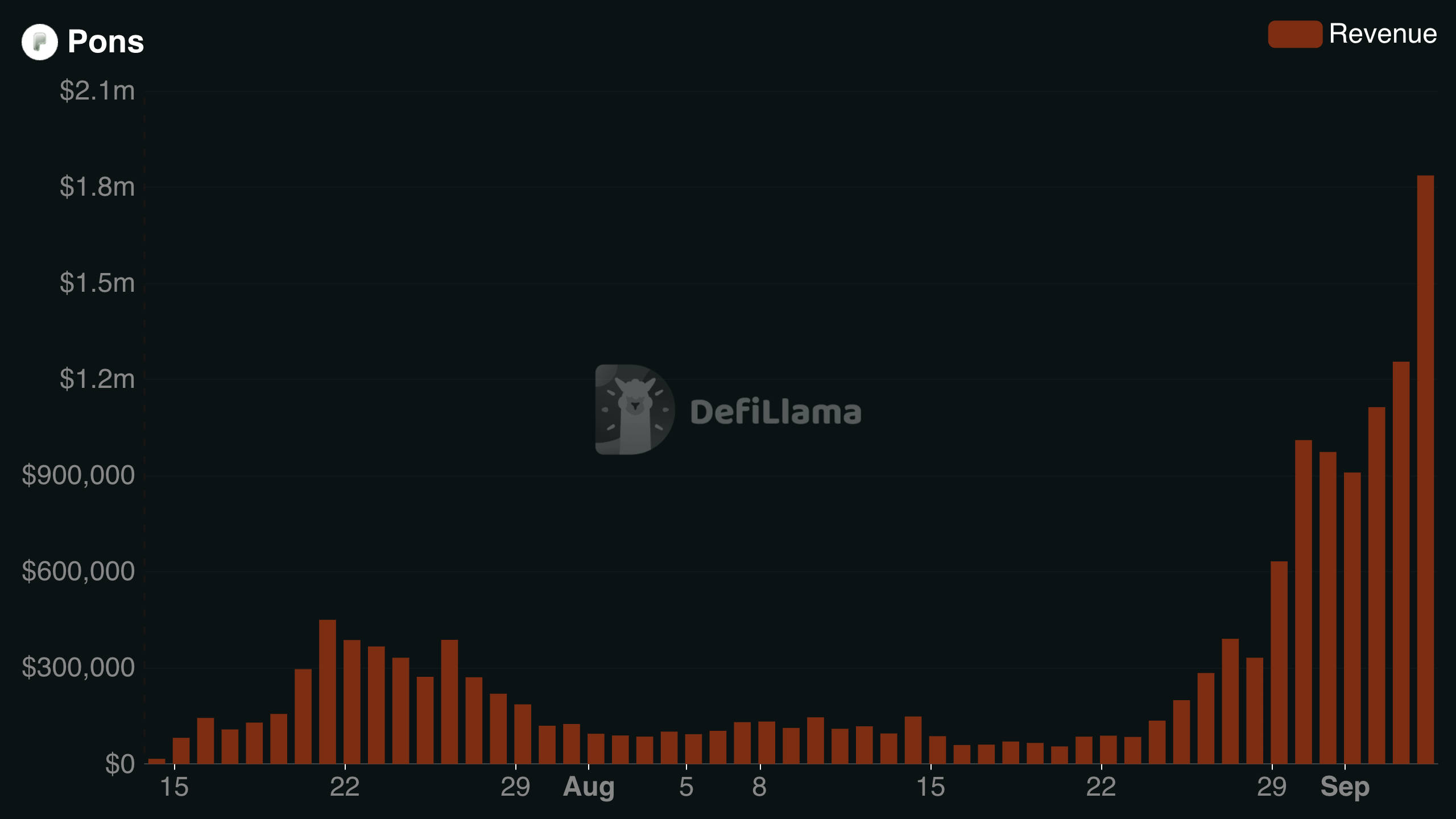
PONS rose from roughly $0.244 at the August 30 open to $0.897 on September 5, about 3.7x. That differs from the rolling seven-day window above. Reference pool
DeFiLlama reports $7.73M of combined V1+V2 protocol revenue over August 29–September 4. Its holder-revenue metric covers V1 only, so comparing those columns cannot establish whether all PONS buybacks are keeping pace. Dashboard and methodology
The v1 docs describe an 80% PONS buyback policy, run manually through a TWAP and still changeable. V2’s optional launch-token buybacks are separate. Before entering, I’d want current PONS-specific purchases and burns reconciled, with revenue holding and price consolidating. A fading launch business or a token price running ahead of verified burns would keep me out.
The LP I’d Investigate: SPY/USDG
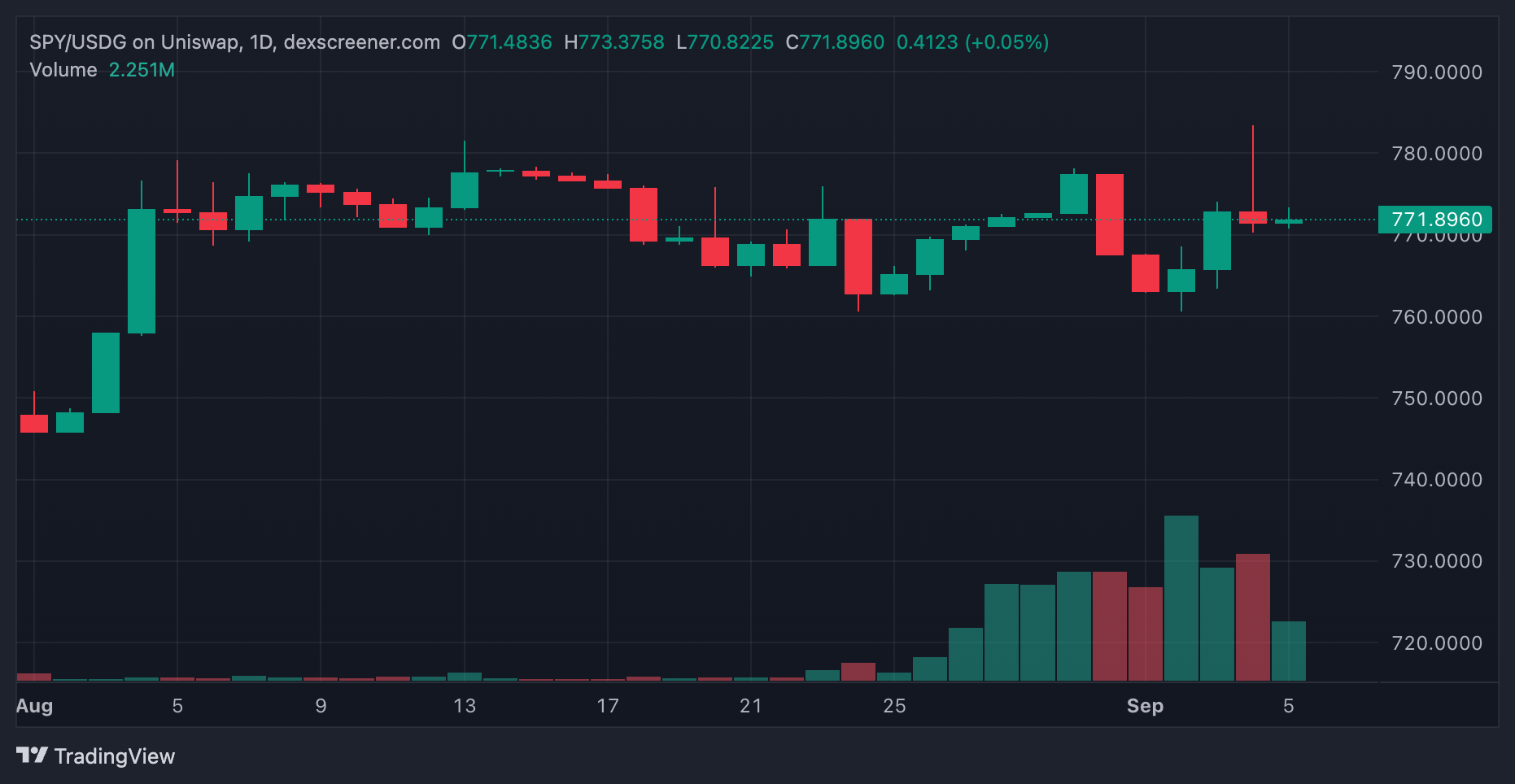
The SPY/USDG Uniswap v4 pool had roughly $9.55M in liquidity, $3.55M of 24-hour volume and a 0.30% fee tier. Across August 30 through the partial September 5 day, it processed $29.07M. That implies about $87,200 in gross fees, before the protocol’s share. Dated volume
Gross fees equal 0.91% of current liquidity over the period, before the protocol share. This screening ratio is not an APY; realized LP returns depend on range and liquidity share.
I’d enter near the issuer’s adjusted reference price during market hours, after checking the protocol cut and choosing a manageable range. Track fees after rebalancing costs versus holding the starting assets. Persistent price gaps, repeated range exits or falling turnover would make me reduce or close it. The LP accumulates stock tokens after a fall and sells them into USDG during a rally.
One farm to distinguish: GIGA’s gauged pools trade swap-fee income for GIGA emissions. Its non-gauged route retains 97% of fees without emissions. The current WETH/USDG gauge’s indexed split shows no LP fees. Price the reward token and its emission schedule before valuing that farm. Pool split · GIGA docs
AERO Is the Base Alternative
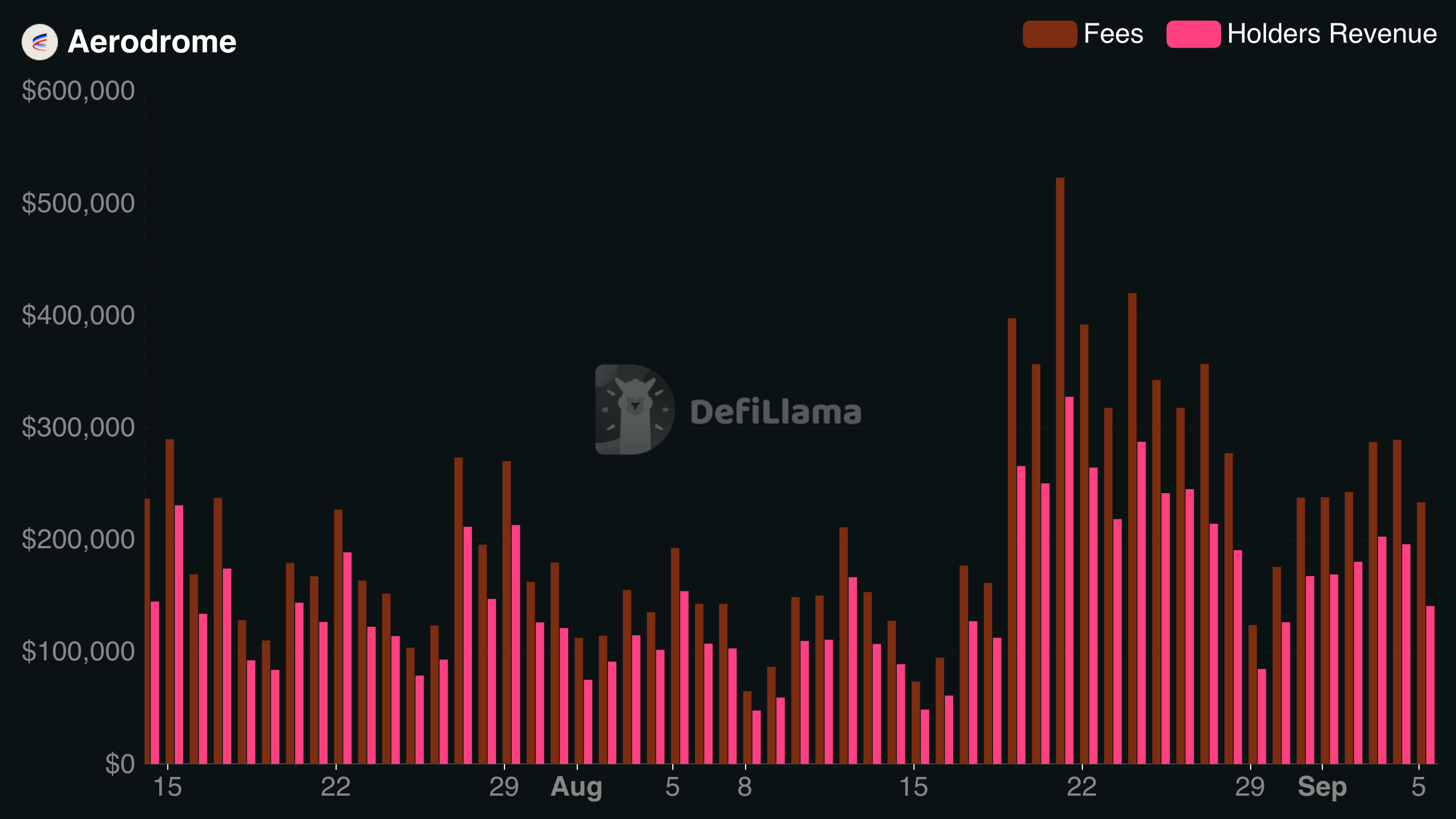
Coinbase’s August 26 newsletter named Aerodrome as a venue for its first tokenized stocks on Base. Coinbase newsletter
The DeFiLlama snapshot reviewed September 5 records $12.76B of 30-day volume, $6.93M in fees and $4.84M for veAERO voters. AERO’s 22% monthly rise is smaller than several peers, though that alone cannot establish value.
Liquid AERO earns no fees. To collect revenue, you lock into veAERO and vote. Locks run from one week to four years, with longer locks getting more voting power. Monthly LP incentives were $9.28M, well above voter income. Lock mechanics
I’d compare the next epoch with the latest $1.12M in weekly voter revenue and $1.92M in LP incentives. Steady fees while AERO cools off would improve the entry. Stagnant fees and rising emissions would make me pass. The lock is a separate commitment from buying liquid AERO.
The Stock-Token Pool I’d Be Careful With
The reported HIMS print of $132.64 on August 30, against a $28.84 Friday share close, came with only about $39,000 of volume in the hour containing the high. Thin pricing can make arbitrage and LP returns look easier than they are. Reporting
Robinhood Stock Tokens are debt securities issued by its Jersey entity, rather than ownership of the underlying shares. Ordinary holders generally depend on secondary markets, with limited direct-redemption exceptions. I’d check the issuer terms, weekend exit and jurisdiction restrictions before funding any stock-token pool. Issuer FAQ · Eligibility
USDG Earn Is a Place to Wait
While waiting, eligible US customers can use Robinhood Earn’s Morpho USDG vault, curated by Steakhouse. Its September 5 page showed 3.70% native APY over seven days. DeFiLlama’s separate observation showed 6.98% total APY, including 3.23% rewards. Earn mechanics
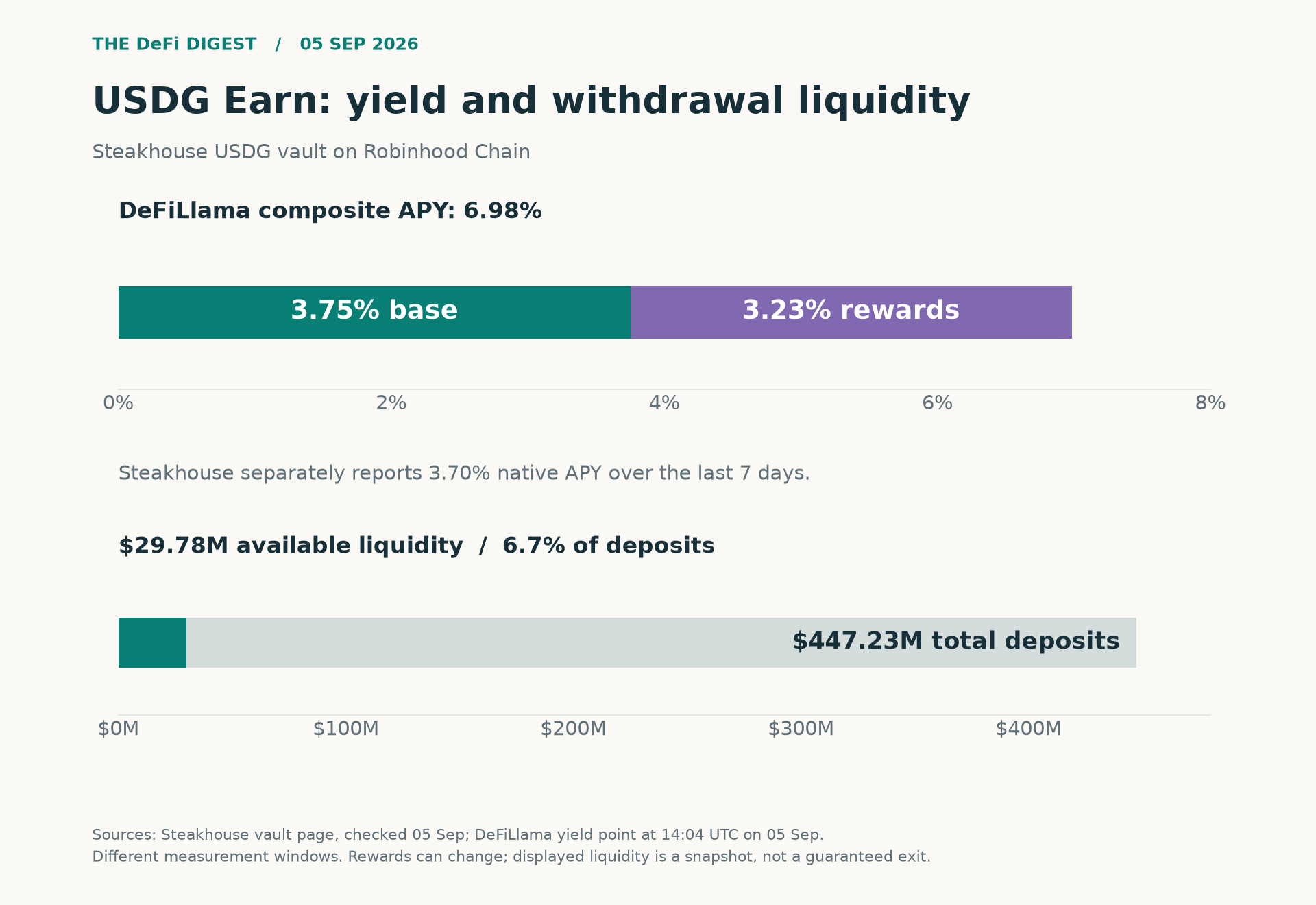
Available liquidity was $29.78M against $447.23M deposited. Withdrawals depend on available liquidity, and the position carries USDG, Morpho and curator/collateral risk. I’d compare its borrower-paid return with last week’s stablecoin options and treat rewards as a bonus that can disappear.
Get the next Weekly Alpha in your inbox: DeFi setups, the evidence behind them and what would change my view.
Onchain Analytics 🧐
The Revenue Jump Is Hard to Miss
DeFiLlama records $6.04M in chain fees and $5.44M in net chain revenue on September 4. Net chain revenue was about $495K on August 29. Those are completed UTC days, rather than an annualized projection from a partial day.
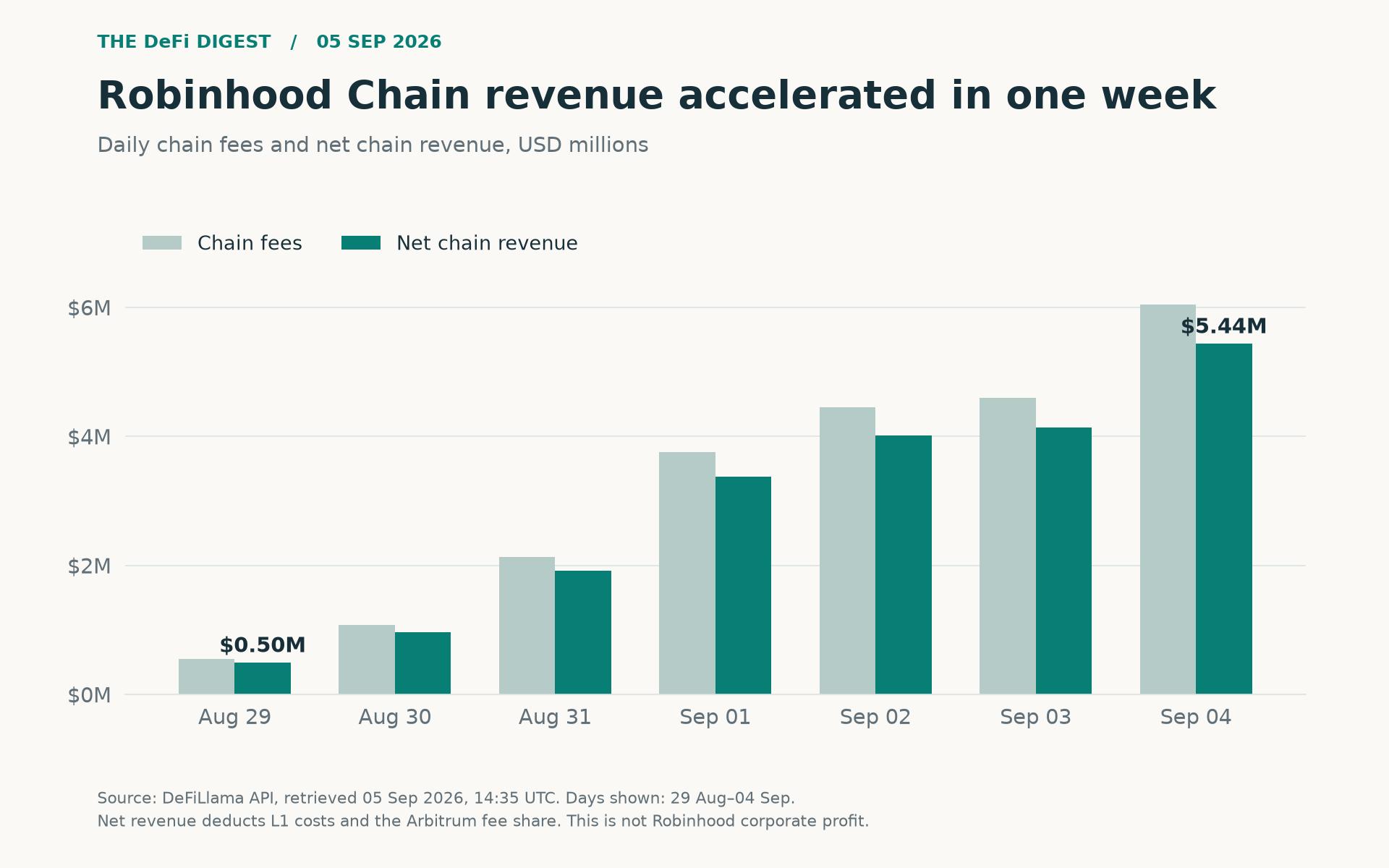
The Wallet promotion excludes bridges, transfers and third-party wallets. Its end will test retention.
Nearly $900M in TVL. How Much Stays?
The historical API’s September 5 point puts Robinhood Chain DeFi TVL at $890.10M, up 31.5% from August 29. USD TVL includes asset-price effects, so that increase cannot all be described as new deposits.
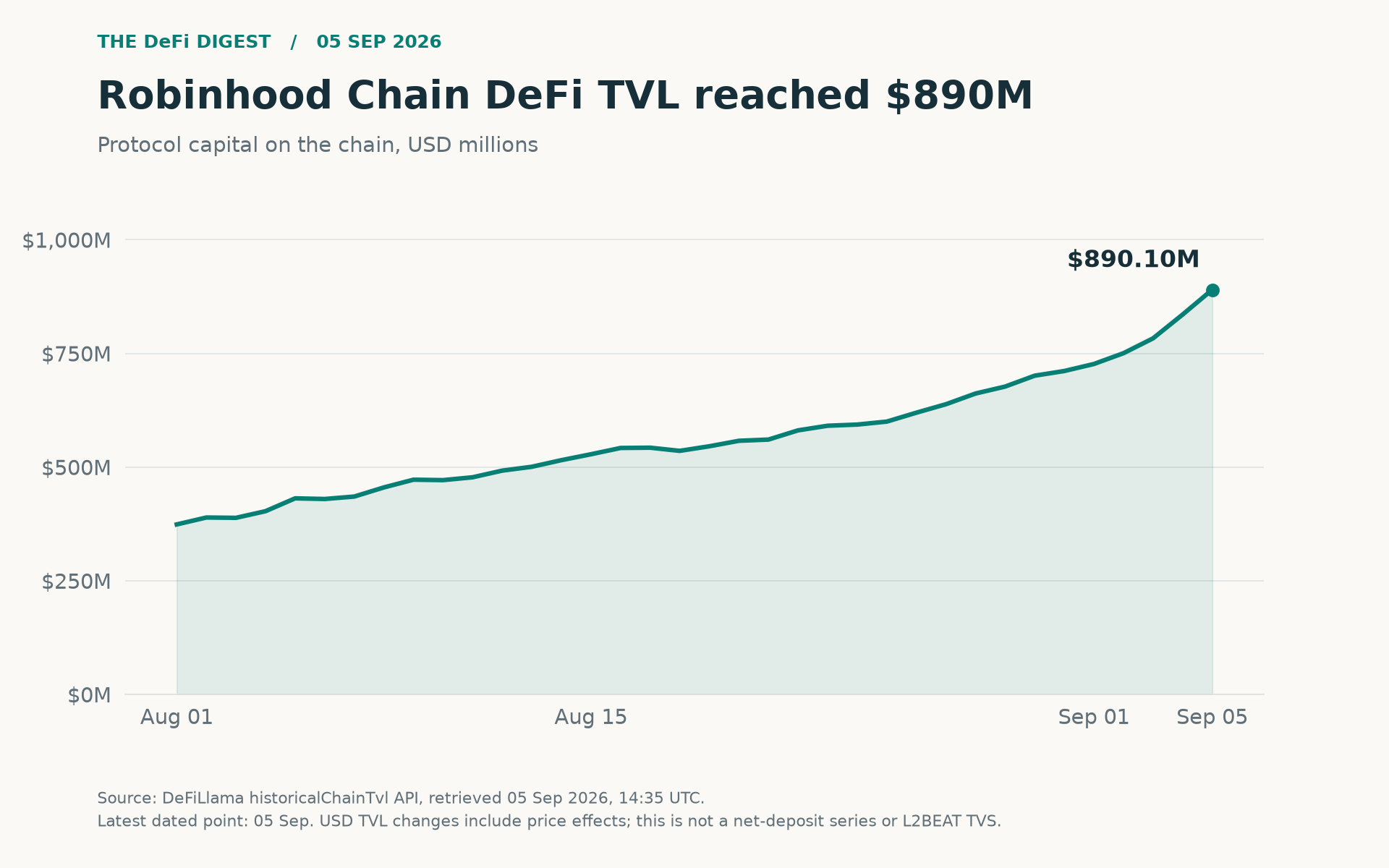
DEX volume totalled $10.73B across August 29–September 4, including $1.89B on September 4, in the DeFiLlama chain DEX series. That is trading turnover, with no stock-token breakdown or assurance of retention.
Who Can Change the Rules?
L2BEAT places Robinhood Chain below Stage 0, with node-software availability under review and two whitelisted challengers. Robinhood’s governance docs distinguish routine Security Council actions, which require six of eight approvals and a seven-day delay, from emergency actions, which can bypass that delay with seven of eight approvals.
Emergency upgrades can remove the expected exit window.
This Week’s Intel 📚
Cronos rolled back history after the Tectonic exploit
After the August 30 exploit, Cronos halted and rolled back 10,961 blocks, including unrelated transactions. 1delta gives the block count; TRM Labs corroborates the rollback. Loss estimates differ. Users should reconcile their balances and transaction status against the restarted chain.
Ethena approved the route to ENA buybacks
The vote closed September 2. Buybacks begin at a $7.5B 14-day average of USDe supply, taking 5% of gross protocol revenue at that rung. ENA has already risen 80.4% over 30 days. Watch the supply gate and actual purchases before treating approval as token income. Governance schedule · Outcome
Bitwise launched PAPY on Morpho
Bitwise launched its Premium RWA Vault on September 2. Users supply Agora’s AUSD to a vault lending against selected tokenized credit collateral. Its 5–6% target APY is variable, and the manager charges a 0.39% annual fee. I’d check the live allocations and net rate, collateral concentration and any separate rewards before relying on the launch target.
Pendle’s PT-USDG demand is showing up on Aave
Aave’s September 4 risk review put PT-USDG at 81.4% of its 35M supply cap on X Layer and recommended doubling that cap to 70M. That gives the Pendle thesis a measurable adoption signal. PENDLE is already up 42% over 30 days; I’d track additional deposits and fees after the cap change before treating the integration as a fresh reason to buy.
The SEC put blockchain records into a transfer-agent proposal
The September 1 proposal contemplates electronic and blockchain-based recordkeeping. It remains proposed rulemaking and does not settle the rights attached to stock-linked tokens already trading.
Podcast Picks 🎧
The Chopping Block: Robinhood Chain’s Memecoin Mania and Tokenized Stocks
Unchained · September 3
Start here if the stock-token and memecoin pairings still seem strange. The panel covers how that market works, what is driving the activity and where retail traders can get hurt.
How Tokenized Stocks Could Undercut Interactive Brokers’ 77% Profit Margin
Unchained · August 28
For the longer-term stock-trading case, Alex Cutler of Dromos Labs discusses Base, Aerodrome liquidity, minting and redemption. It’s a useful companion to the Robinhood discussion because it asks how onchain markets might compete with established brokers.
If you’re running one of these pools, I’d be interested in your realized fees after rebalancing, especially once rewards are stripped out. Hit reply.
For related reading, revisit Where I’d Park Stablecoins This Week and the ONDO value-capture discussion in Weekly Alpha #59.
Share this issue with someone comparing DeFi trades this week.
Nothing in this newsletter is financial, investment or legal advice. Crypto, DeFi and tokenized securities can lose value or fail. Risks include issuer and counterparty failure, smart-contract bugs, collateral losses, oracle errors, changing rewards, limited liquidity and restrictions on access or redemption. Verify the current product terms and your eligibility, do your own research, and never invest more than you can afford to lose.
Good read even though it has been awhile since you posted. This most recent dip I got some ENA and more AAVE for major defi and for Robinhood got some UP and Quotrons. See the token proliferation coming will be pretty massive.
Hi Yannis, thanks for the update!
I held ARB for about two years before eventually giving up on it for a number of reasons.
Do you know what drove such a big move over the past week?