

In this edition of The Weekly Alpha:
🧑🌾 3 Tokens I’m Watching Right Now
🧐 Onchain Analytics
📚 This Week's Intel
🎧 Podcast Picks
Hello everyone,
We are starting to see more movement in the altcoin market, especially around the Ethereum ecosystem. A few narratives are beginning to take shape again: privacy, RWAs, and Base ecosystem tokens.
In this edition of Weekly Alpha, I want to look at three tokens I’m watching right now.
ONDO Finance and the Value Capture Question
Ondo is one of the RWA tokens I’m watching most closely.
The RWA thesis keeps getting clearer: more of the stock, bond, and money market universe is going to move onchain over time
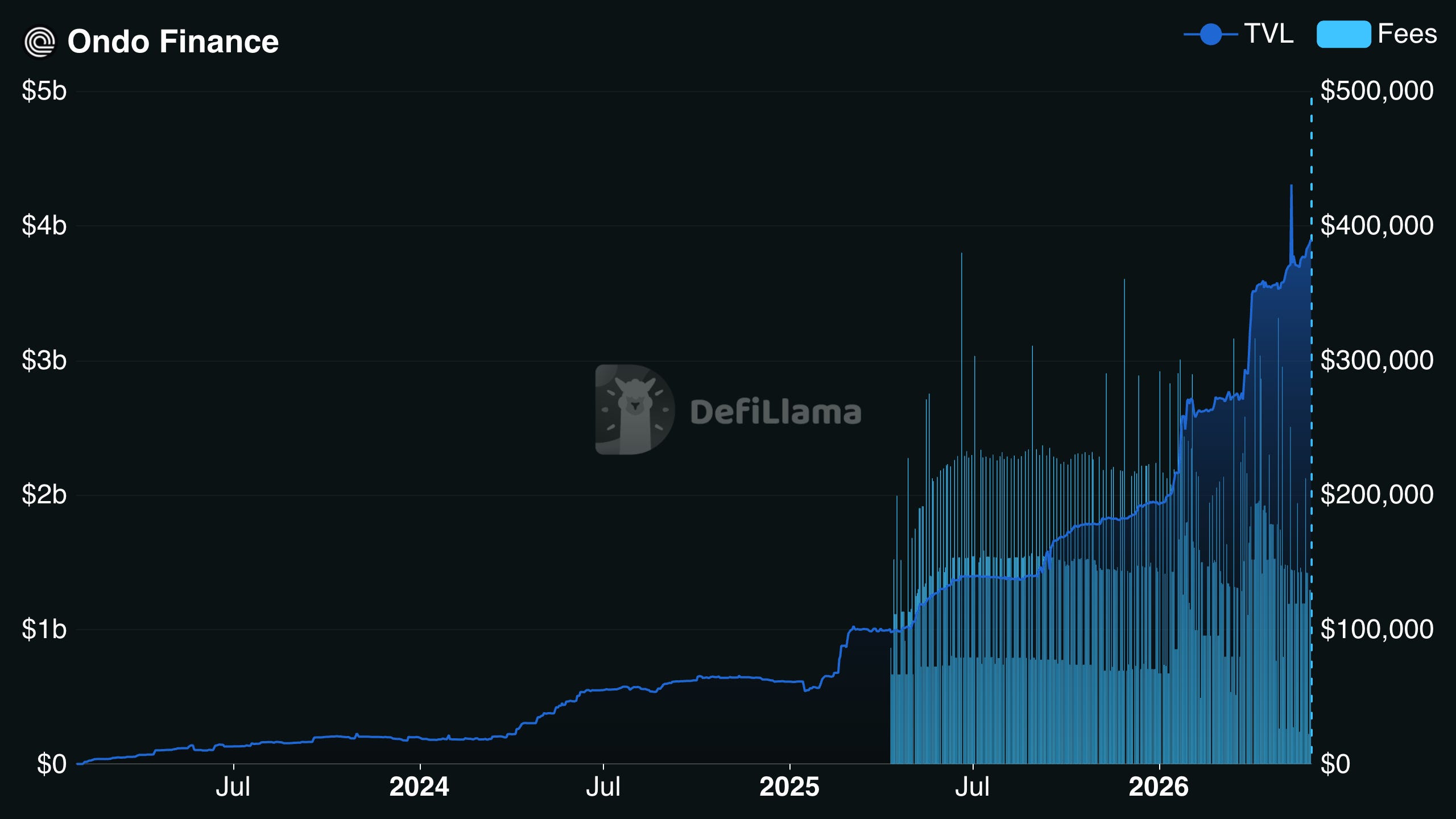
The reason is simple. Tokenized assets can trade 24/7, settle faster, move across wallets and protocols, and plug into DeFi in a way traditional assets cannot.
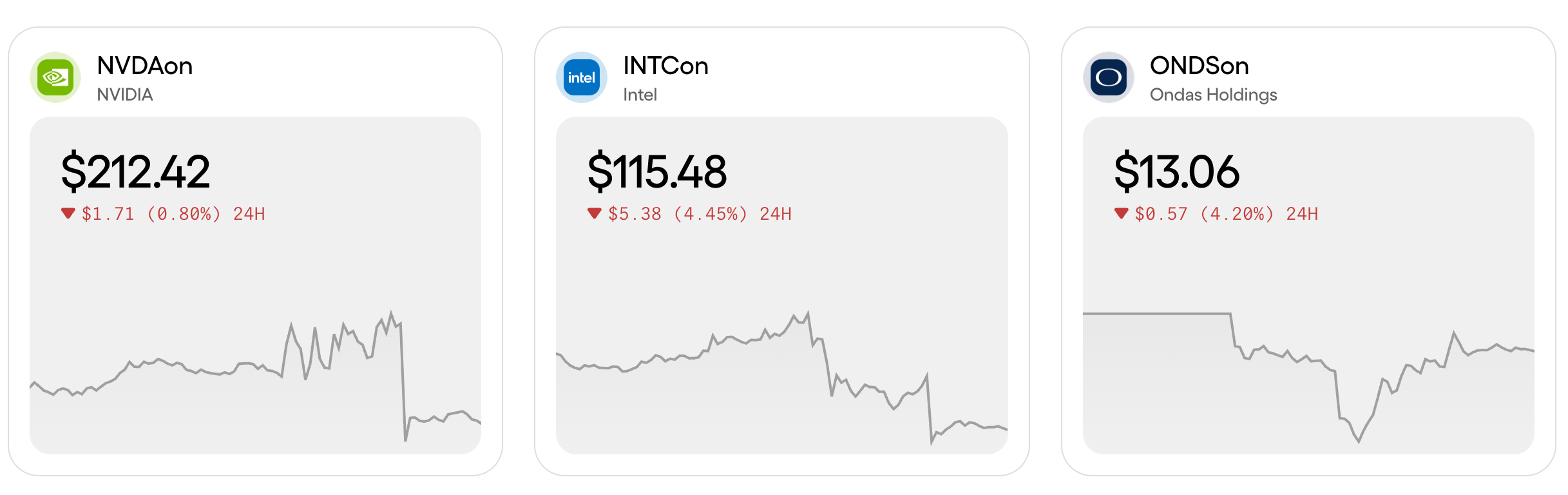
Ondo is one of the strongest names in that category. It already has real products, strong institutional positioning, and a clear narrative behind it.
The part I’m more cautious on is the token.
ONDO has a fixed supply of 10B tokens, with roughly 4.87B currently circulating based on recent tokenomics data. That means a large part of the supply is still locked and will keep unlocking over time.
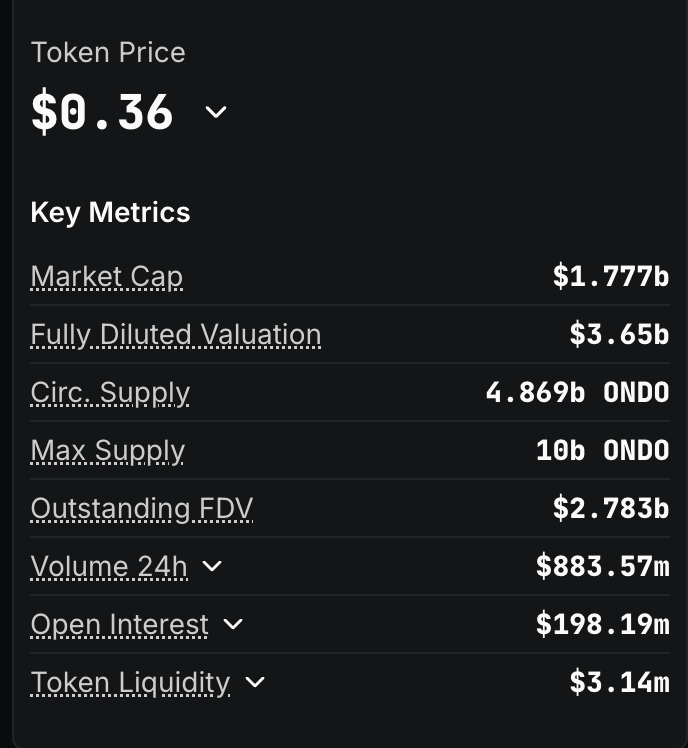
More importantly, ONDO still looks mostly like a governance token today. Ondo’s products may grow, but that does not automatically mean ONDO captures the value.
That is the reason I have not started accumulating yet.
The bullish case is that Ondo keeps growing, RWAs keep expanding, and governance eventually introduces stronger holder economics, whether through fee sharing, buybacks, or another mechanism.
The bearish case is that Ondo the company wins, but ONDO remains mostly a governance asset while most of the economic value stays at the product layer.
That is why I’m watching it closely. The narrative is strong, the category is real, but for me the token becomes much more interesting if it starts capturing more of the value that Ondo is creating.
Ticker: ONDO
RAILGUN: Privacy On Ethereum
The second token I’m watching is RAIL.
There is a lot of social attention around privacy right now. Last week, I wrote about VVV and private AI, but the same idea applies onchain: as crypto gets bigger, users will care more about what they expose publicly.
RAILGUN is interesting because it is not trying to be a separate privacy chain. It brings privacy directly to Ethereum and other EVM networks, using zero-knowledge proofs to let users interact privately with DeFi.
That matters. If Ethereum becomes the settlement layer for RWAs, stablecoins, trading, and onchain finance, privacy becomes more important, not less. Funds, traders, DAOs, and regular users will not want every wallet movement, strategy, or position fully exposed forever.
RAIL has already moved with the privacy narrative. The token is trading around $3, after reaching an all-time high near $5.66 in November 2025. So this is not an undiscovered chart anymore, but it is still one of the names I’d keep on the watchlist if the privacy trade keeps gaining attention.
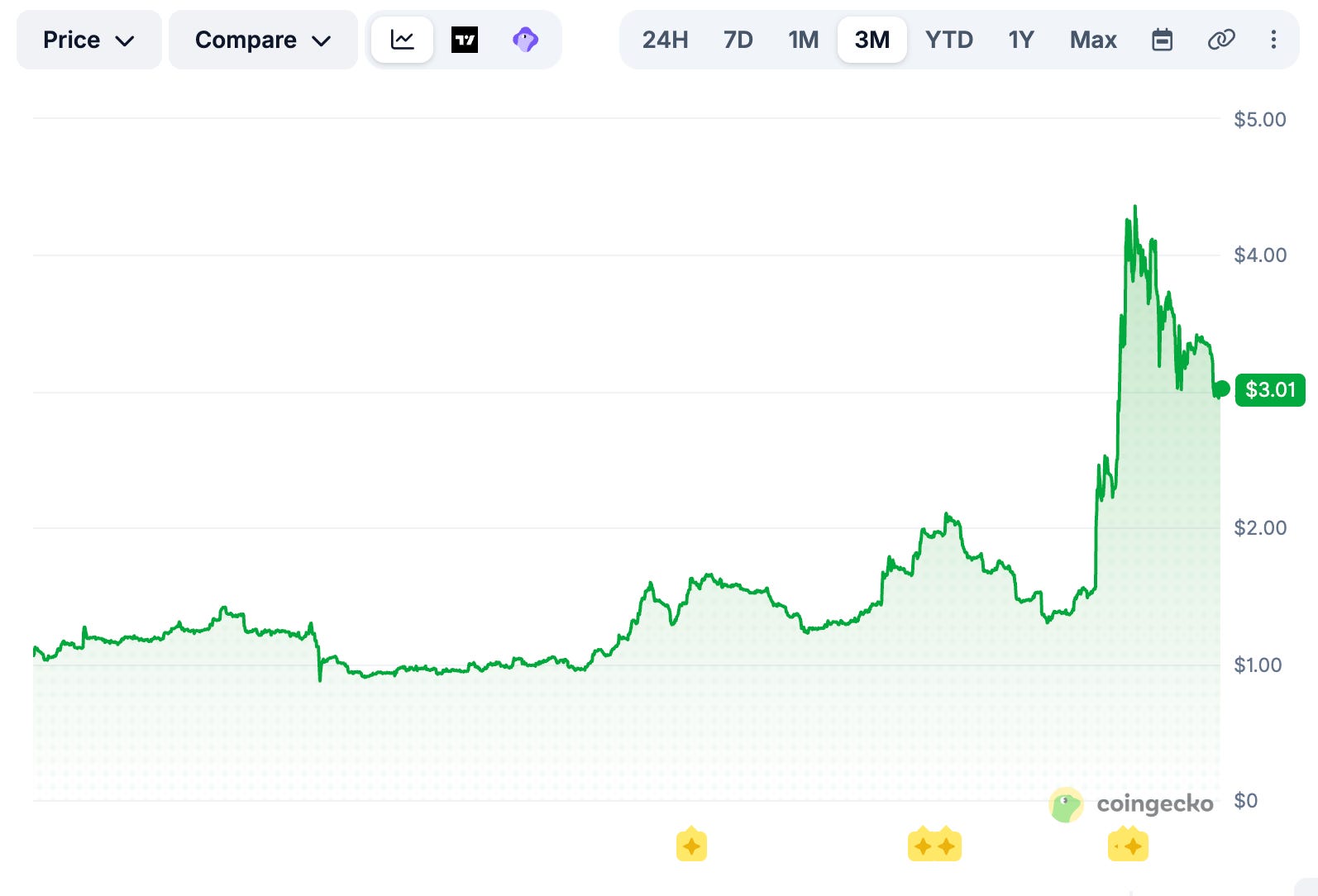
The token setup is also worth understanding. RAIL is not required to use RAILGUN, and the docs are clear that it is not a privacy coin. It is mainly a governance and security token. Users can lock RAIL to participate in governance and collect security rewards, which gives the token more utility than a pure voting asset.
The main concern is regulation.
Privacy protocols will always sit in a difficult part of the market. Tornado Cash showed how quickly this category can become politically sensitive, even when the underlying technology has legitimate use cases.
RAILGUN is different in design, and one important feature is Private Proofs of Innocence. Users can prove their funds are not associated with known high-risk sources without revealing their full transaction history.
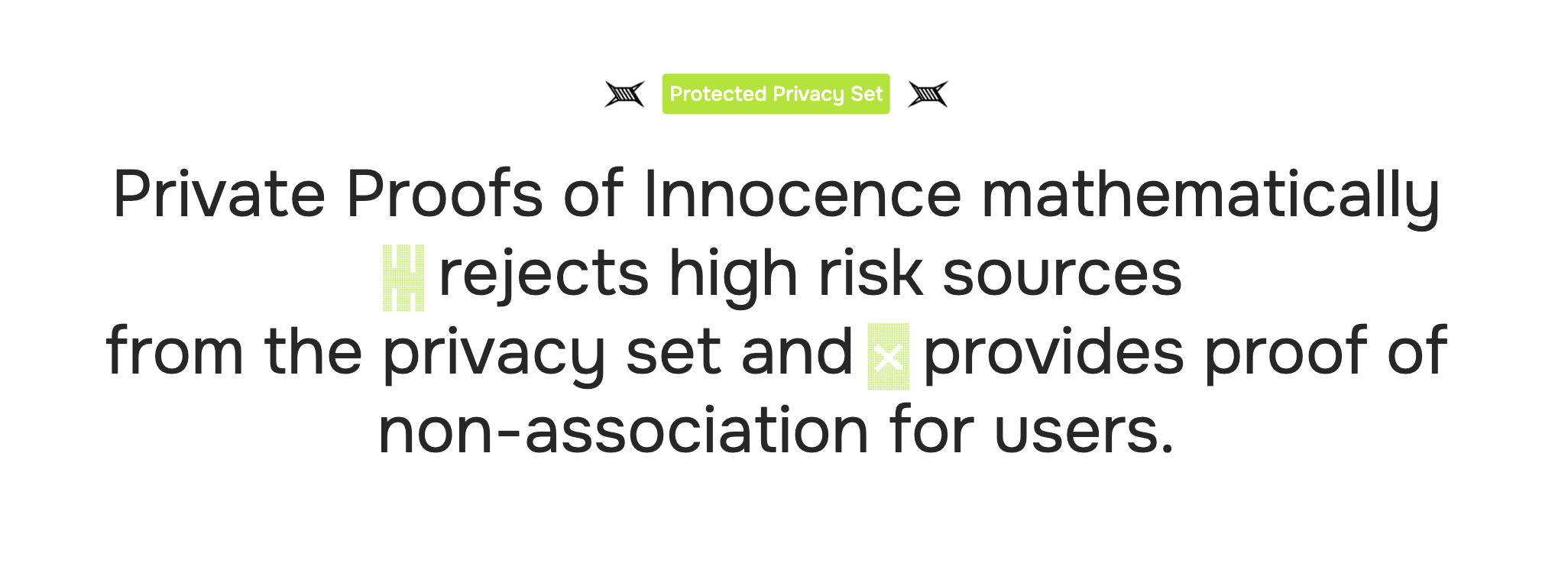
That matters because it gives RAILGUN a stronger compliance argument than a simple “hide everything” privacy tool. It keeps the privacy layer, but adds a way for users to show non-association when needed.
Still, the regulatory risk does not disappear. If privacy becomes a major narrative again, protocols like RAILGUN could attract more attention from regulators, exchanges, and analytics providers.
That is the tradeoff with RAIL: the upside is tied to privacy becoming important again, but the downside is that privacy tokens can attract serious regulatory pressure if they become too visible.
For now, I see RAIL as a high-risk privacy bet on Ethereum. Interesting, useful, and worth watching, but not something I would treat as a clean or low-risk trade.
Ticker: RAIL
Lighter: The Hyperliquid Alternative I’m Watching
The third name I’m watching is Lighter.
If you are still active in crypto, you know the Hyperliquid narrative has been extremely strong. It makes sense. Hyperliquid has product-market fit, volume, mindshare, and one of the clearest perps stories in the market.
But when a category gets that hot, I also like to look for earlier, higher-risk alternatives.
That is where Lighter becomes interesting.
The simple way to describe Lighter is this: a high-performance onchain perps exchange with an Ethereum L2 and zk verification angle.
It sits in the same mental bucket as Hyperliquid because both are trying to build fast, liquid, trader-focused perp venues. The difference is the architecture. Hyperliquid runs its own chain with a smaller validator set, while Lighter is built as an application-specific zk rollup that settles back to Ethereum.
That gives Lighter a different narrative.
It is not just “another perp DEX.” It is a bet that traders will eventually care about speed, liquidity, and better verification. Every trade does not need to feel like a slow DeFi transaction, but users still want stronger guarantees than a fully centralized venue.
That is the bull case.
Lighter could become one of the cleaner Ethereum-native answers to Hyperliquid if it keeps improving liquidity, execution, and user experience.
But this is still early.
On L2Beat, Lighter is currently listed as a Stage 0 appchain. That means there are still meaningful trust assumptions, especially around upgrades and operational control. So I would not pretend this is already fully decentralized infrastructure.
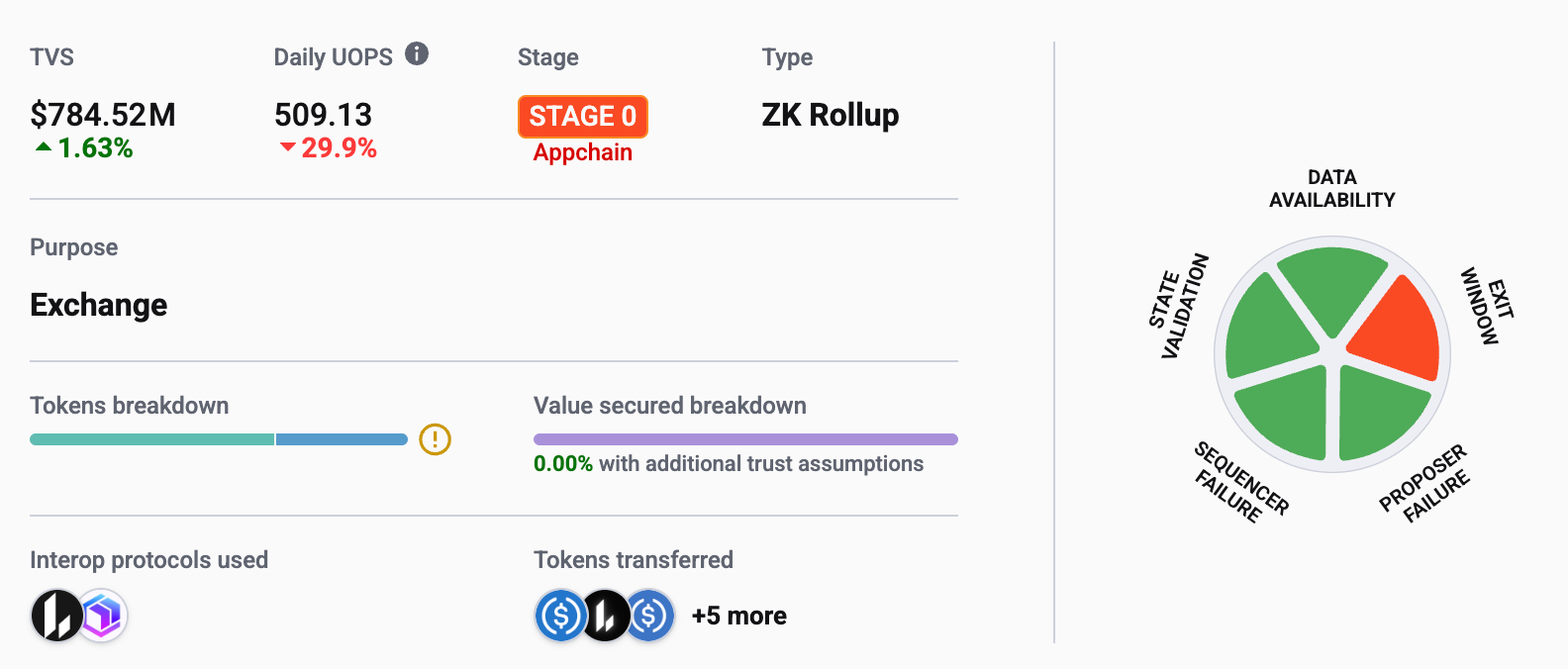
To be fair, Hyperliquid also has centralization questions because it relies on a relatively small validator set. So the comparison is not “one is perfect and the other is risky.” Both are early in different ways.
The real question is execution.
In perps, better architecture does not automatically win. Traders care about liquidity, spreads, uptime, markets, leverage, incentives, and whether the venue actually feels good to use. If Lighter gets those right, it can become a serious competitor. If it does not, the zk angle will not matter much.
For now, I see Lighter as a higher-risk bet on the same onchain perps trend that made Hyperliquid so successful.
Hyperliquid has the lead today. Lighter is the earlier, more speculative Ethereum-aligned alternative.
Ticker: LIT
Conclusion
The market feels boring right now.
Bitcoin and Ethereum are not doing much, and most altcoins still look weak. But the interesting part is that tokens with clearer fundamentals and stronger narratives are starting to move.
That is a healthier setup than another pure memecoin rotation.
I would rather see capital flow toward real protocols, useful infrastructure, privacy, RWAs, perps, and products people actually use. That is how the industry builds a stronger base for the next cycle.
Crypto is still early, but the direction matters. If the next alt market is led by projects with actual usage instead of pure speculation, I think that is a much better market to be involved in.
Onchain Analytics 🧐
This is where I share what I’ve actually been looking at onchain. The stuff that shapes how I’m positioning, not just what I’m buying.
Obol TVL Spikes As Ethereum Staking Demand Stays Strong
Obol’s TVL jumped sharply this week, reaching roughly $780M on DeFiLlama.
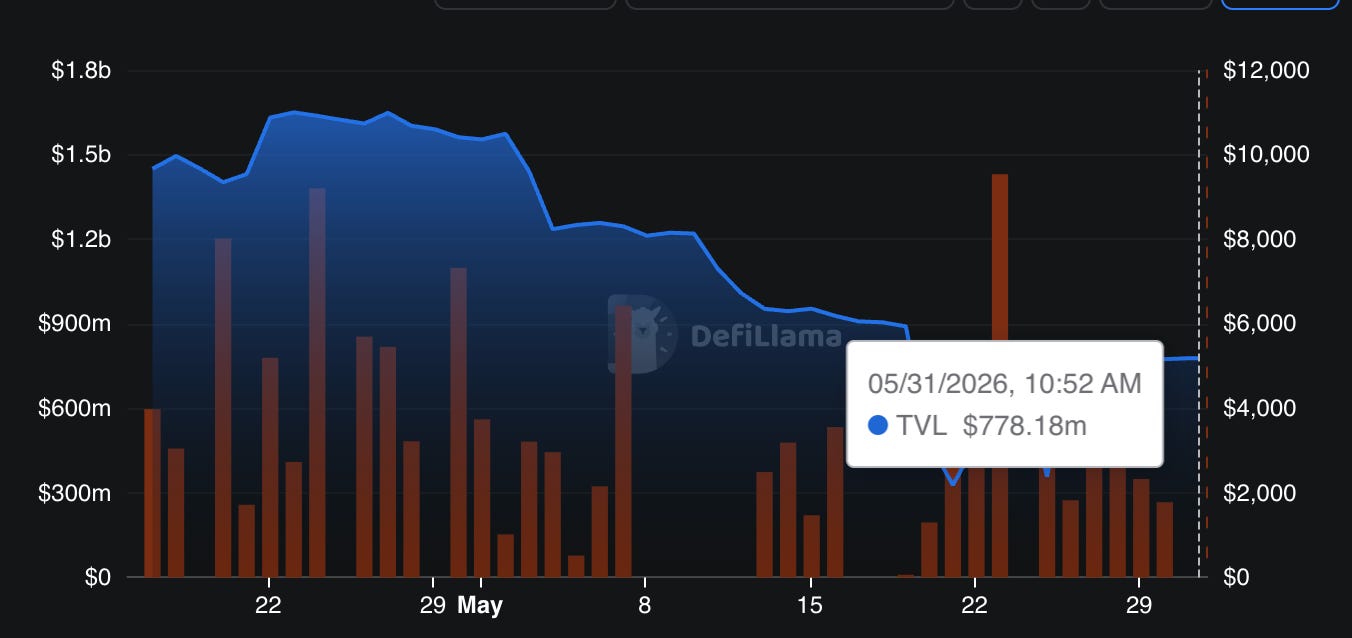
That matters because last week we looked at Ethereum’s validator queue: more than 3M ETH waiting to enter staking, an estimated wait of around 60 days, and almost nothing sitting in the exit queue.
Obol does not magically skip the validator queue. Every new Ethereum validator still has to go through the normal activation process. But the move does show that demand for more advanced staking infrastructure is still alive.
That is the cleaner read: if ETH staking demand remains high, protocols that help coordinate distributed validator infrastructure should keep getting attention.
The chart to watch is simple. If Obol TVL keeps rising while Ethereum’s entry queue stays elevated, DVT is becoming one of the places where staking demand expresses itself.
Limitless Fees Jump As Prediction Markets Expand On Base
Limitless Exchange was one of the cleaner fee movers this week.
According to DeFiLlama, the Base prediction market protocol generated roughly $1.96M in fees over the past 7 days, up about 188% week-over-week.
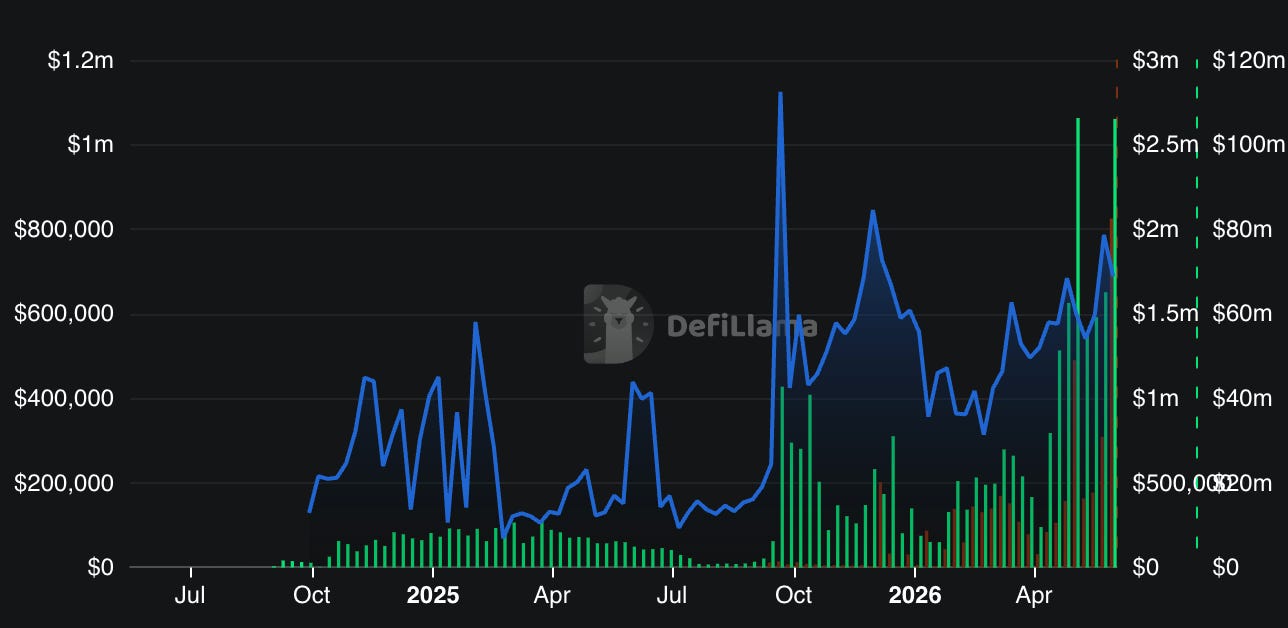
That is a meaningful move for a newer prediction market venue.
Polymarket still owns most of the mindshare in this category, but Limitless is showing that prediction markets are not only a Polygon story. Base is becoming a natural home for smaller, faster, cheaper onchain trading experiences, and prediction markets fit that well.
The caveat is that prediction market volume can be very event-driven. A spike in fees does not automatically mean durable adoption. It can come from one hot market, one news cycle, or one temporary burst of speculation.
Still, this is worth tracking. If Limitless keeps generating fees after the current event cycle fades, then the signal becomes much stronger.
DEX Volume Is Spreading Across More Venues
The DEX market is still active, but it is becoming more fragmented.
DeFiLlama shows roughly $41B in 7-day DEX volume across all chains. The total is only slightly higher week-over-week, but the interesting part is where the activity is showing up.
Manifest Trade did around $844M in 7-day volume. Metric did around $543M. SUNSwap V3 did around $336M.
None of these are Uniswap-sized alone, but that is the point. DEX activity is no longer only about one dominant venue. Liquidity is spreading across Solana, Tron, Base, Hyperliquid, and newer app-specific trading venues.
For Uniswap, I would not overstate the bearish read this week. The live fee data I checked does not confirm a major collapse in V4 fees. The better takeaway is broader: DEX volume is still there, but the market is becoming more multipolar.
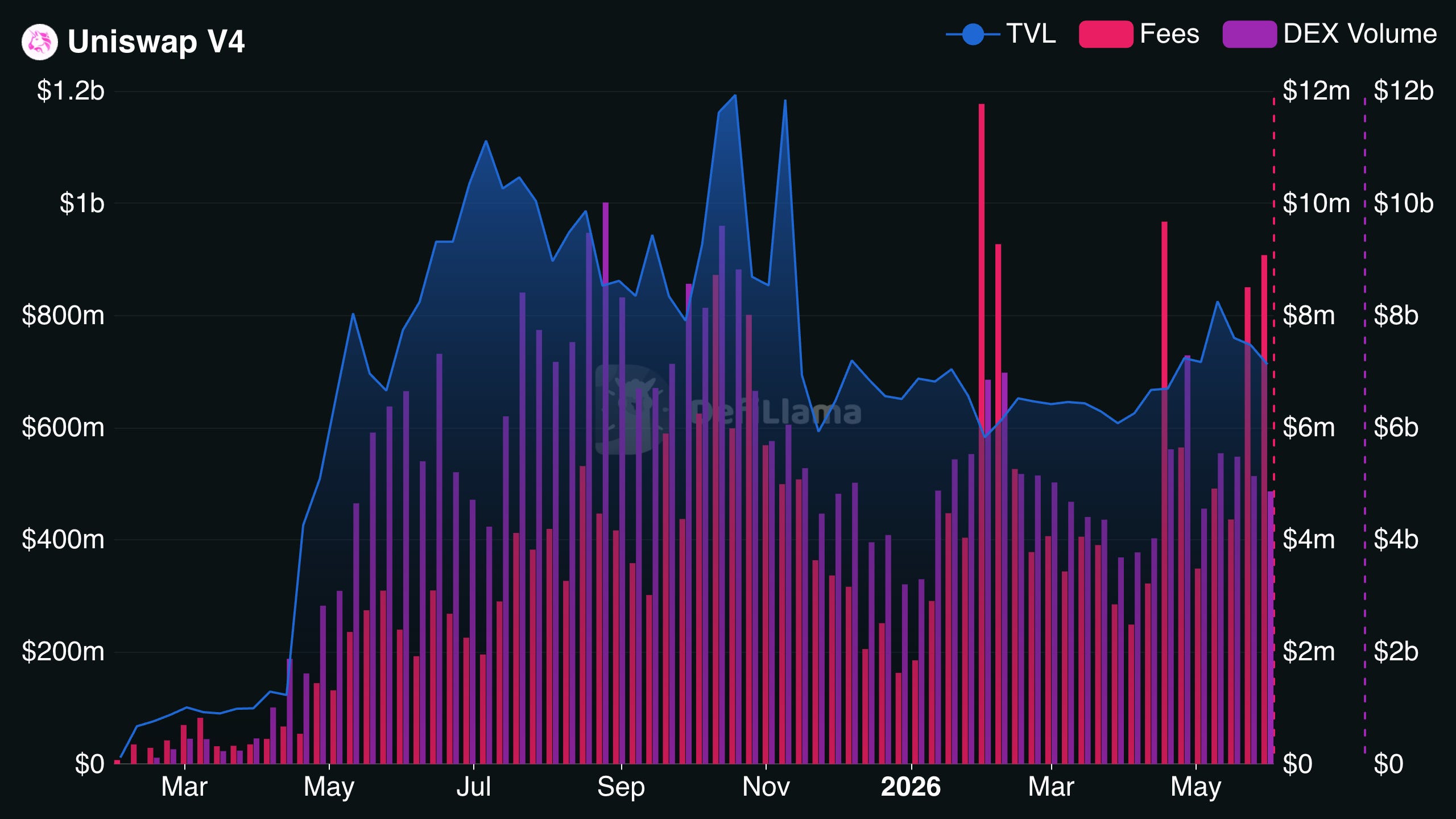
That matters for investors because the next winner may not be “the biggest DEX.” It may be the venue that owns a specific flow: meme trading, perps, prediction markets, stablecoin swaps, or chain-native liquidity.
This Week’s Intel 📚
Here’s what was actually worth reading this week.
1. ERC-7943 Reaches Final Stage For RWA Tokenization
ERC-7943, a new Ethereum standard for real-world asset tokenization, has reached the final stage of the EIP process.
This is not the kind of headline that pumps immediately, but it matters.
If institutions are going to bring regulated assets onchain, they need more than a token contract. They need identity, transfer rules, compliance hooks, and standards that work across different systems. ERC-7943 is trying to create that baseline.
The bigger point is simple: RWA tokenization is moving from “cool narrative” to actual infrastructure. Standards are boring until they become the thing everyone builds on.
The caveat is adoption. A finalized standard does not mean instant institutional TVL. It just makes the path cleaner.
Source: Cointelegraph
2. Base Launches MCP Gateway For AI Agents
Base launched an MCP gateway that lets AI agents connect to user Base accounts and execute onchain actions like swaps, trades, and portfolio management.
This fits directly into the agent-payment / agent-finance theme.
The important part is not just “AI agents are coming.” It is that Base is building the rails for agents to actually do things onchain. The gateway already mentions integrations with protocols like Morpho, Moonwell, Bankr, Avantis, Virtuals, Uniswap, and Aerodrome.
That makes Base one of the clearer venues for AI x DeFi experiments.
The risk is obvious: giving agents wallet permissions is still early and will need strong UX, limits, and security assumptions. But directionally, this is exactly the kind of infrastructure to watch.
Source: The Defiant
3. Aave Proposes Native BTC Borrowing Through Babylon
Aave has a governance temp check to integrate Babylon into Aave V4, allowing users to borrow against native BTC collateral without relying on wrapped BTC or centralized custody.
This is one of the more interesting DeFi proposals right now.
Bitcoin is still the largest pool of dormant collateral in crypto, but most BTC-backed DeFi depends on wrappers, bridges, or custodians. If Aave V4 can support native BTC collateral through a dedicated spoke, it could make Bitcoin borrowing feel much cleaner.
This is still early. It is a temp check, not a live product. Babylon integration adds new risk, and native BTC collateral brings different liquidation and operational assumptions.
But if this moves forward, it is a real DeFi primitive, not just another incentive campaign.
Source: The Defiant
Podcast Picks 🎧
Podcasts worth your time this week.
How To Trade The AI Productivity Boom | Forward Guidance
A macro discussion on whether the AI boom is a real productivity shock or just a market narrative being pulled forward.
They connect AI capex, equity concentration, Fed policy, labor pressure, and the K-shaped economy.
The most useful part is how markets price productivity before it fully shows up in the real economy.
Good listen if you want a macro lens on AI, rates, and risk assets.
Is Crypto Broken? | Bell Curve
This episode asks whether crypto has lost its ability to create real apps beyond Bitcoin, Ethereum, and stablecoins.
They discuss why many tokens launched too early, before product-market fit or real value capture existed.
Stablecoins come through as one of the few obvious crypto winners, while consumer apps still feel weak.
Good listen for a sober take on what crypto needs next: products people actually use, not just narratives.
Why Hyperliquid Is Still Undervalued | The Rollup
This one focuses on Hyperliquid and why Bitwise sees HYPE as more than just another perp DEX token.
They cover ETF demand, fee generation, buybacks, and the structural demand this could create for HYPE.
The episode also touches on HyperEVM, spot markets, prediction markets, and Hyperliquid’s broader ecosystem.
Good listen if you want to understand why institutions are starting to look at Hyperliquid seriously.
That’s it for this week.
If you found this useful, share it with someone who is trying to make sense of this market.
You can also follow me on X and Farcaster for more frequent updates.
Nothing in this newsletter is financial advice.
I personally use many of the protocols I write about, but that does not make them safe. Crypto is risky, DeFi is risky, and things can break quickly.
Do your own research, size positions carefully, and never invest more than you can afford to lose.
Strong breakdown, Yannis.
The ONDO point is the one investors need to sit with: product-market fit and token value capture are not the same thing.
RAIL is interesting because privacy will matter more as onchain finance grows, but regulatory pressure is the obvious risk.
Lighter is also worth watching, but execution beats architecture in perps. Traders care about liquidity, speed, spreads, and reliability first.