

Weekly Alpha: Your edge in DeFi before everyone else figures it out.
In this edition of The Weekly Alpha:
📚 This Week's Intel
🎧 Podcast Picks
🧑🌾How RWA Is Rebuilding Global Finance Onchain
🧐 Onchain Analytics
This Week's Intel 📚
The signal from the noise, this week's developments that actually matter for your DeFi positioning.
I've filtered through the endless stream of headlines, hot takes, and crypto Twitter drama to bring you the stories moving the ecosystem forward. These aren't just news updates; they're intelligence briefings on where capital is flowing, which narratives are gaining traction, and what regulatory shifts could reshape your strategy.
Skip the timeline doom-scrolling. This is your weekly intel drop.
Espresso Token Launches at $275 Million Valuation - read
Vitalik Buterin: Hedging on Prediction Markets Could ‘Replace Fiat Currency’ - read
Ether steadies after $540 million sell wave to outperform wider crypto market - read
Onchain analytics tool Parsec winding down operations - read
Crypto markets feel the chill, Base, ether.fi reorganize layer-2 landscape - read
How Ethereum devs will use AI to boost blockchain’s development - read
ZeroLend Latest DeFi Platform to Shut Down Amid Liquidity, Revenue Pressures - read
Hyperliquid-Based Ventuals’ Trading Volume Surges 100% in 17 Days - read
deBridge launches MCP, enabling AI agents to execute non-custodial cross-chain transactions - read
Aave price tumbles as ‘most productive’ contractor leaves DAO - read
BNP Paribas taps Ethereum for new money market fund tokenization pilot - read
Podcast Picks 🎧
This week’s audio alpha: handpicked conversations that shaped my thinking and could shift yours too.
I sift through hours of DeFi content so you don't have to. These are the episodes worth your commute, the insights that made me pause and rewind, and the perspectives that are moving markets before they hit mainstream media.
Queue these up and stay ahead of the narrative.
How RWA Is Rebuilding Global Finance Onchain
While crypto markets have been taking a beating, RWA has been telling a different story. Sure, tokens like ONDO are down significantly, but the underlying fundamentals have remained largely intact. Adoption is growing, TVL is holding, and institutional interest isn't going anywhere. That disconnect between price action and real-world metrics is hard to ignore, and it points to something worth paying attention to: RWA might be one of the better ways to diversify right now without ever leaving the chain.
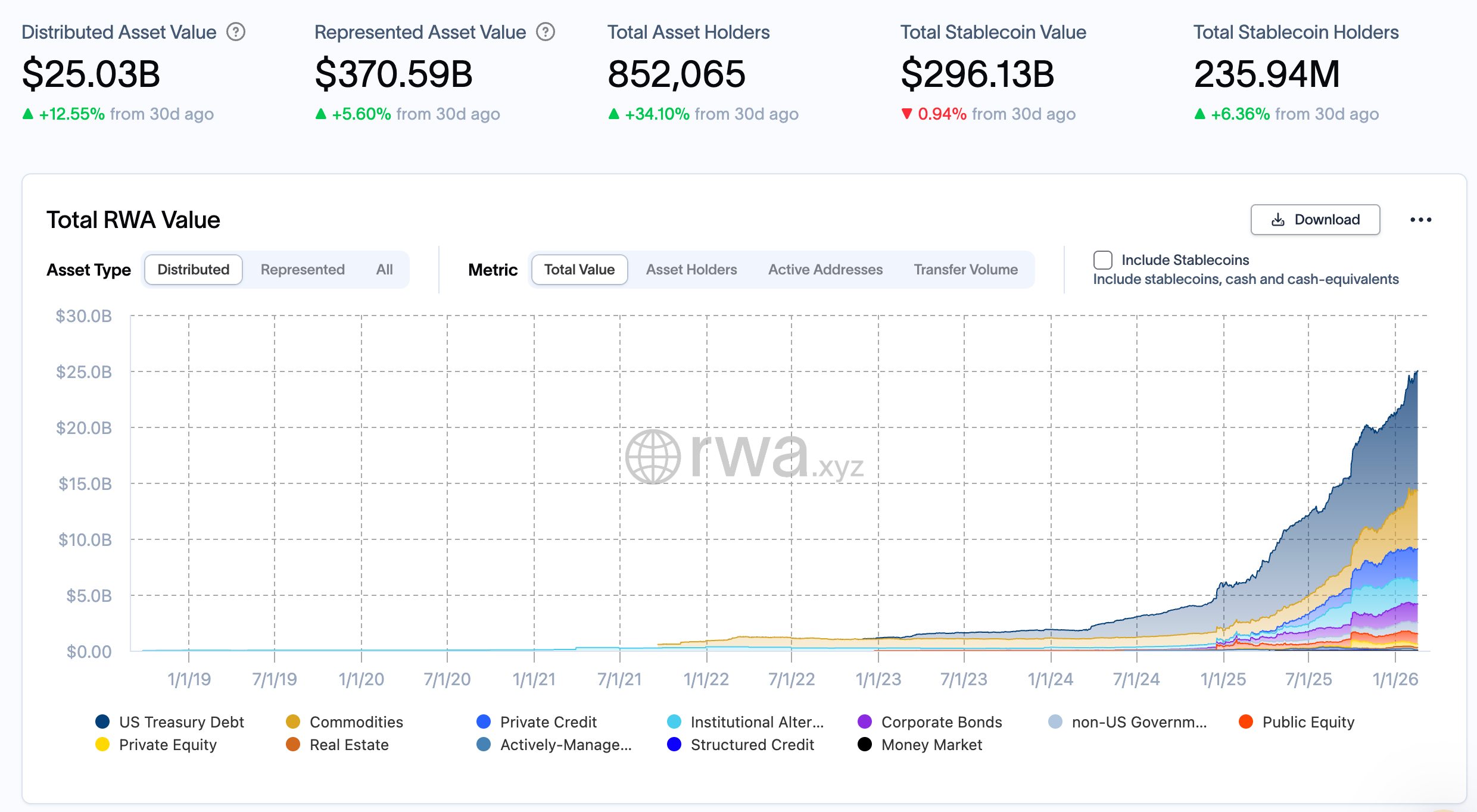
Tokenized stocks
Tokenized stocks are playing an increasingly significant role in the onchain RWA economy, and protocols like Ondo Finance are leading the charge. The core value proposition is simple but powerful: you can trade 24/7 and plug directly into DeFi protocols like Uniswap. Want exposure to the S&P 500 ETF, Tesla, or Google? You can find them on Ondo Finance and put them to work like any other onchain asset.
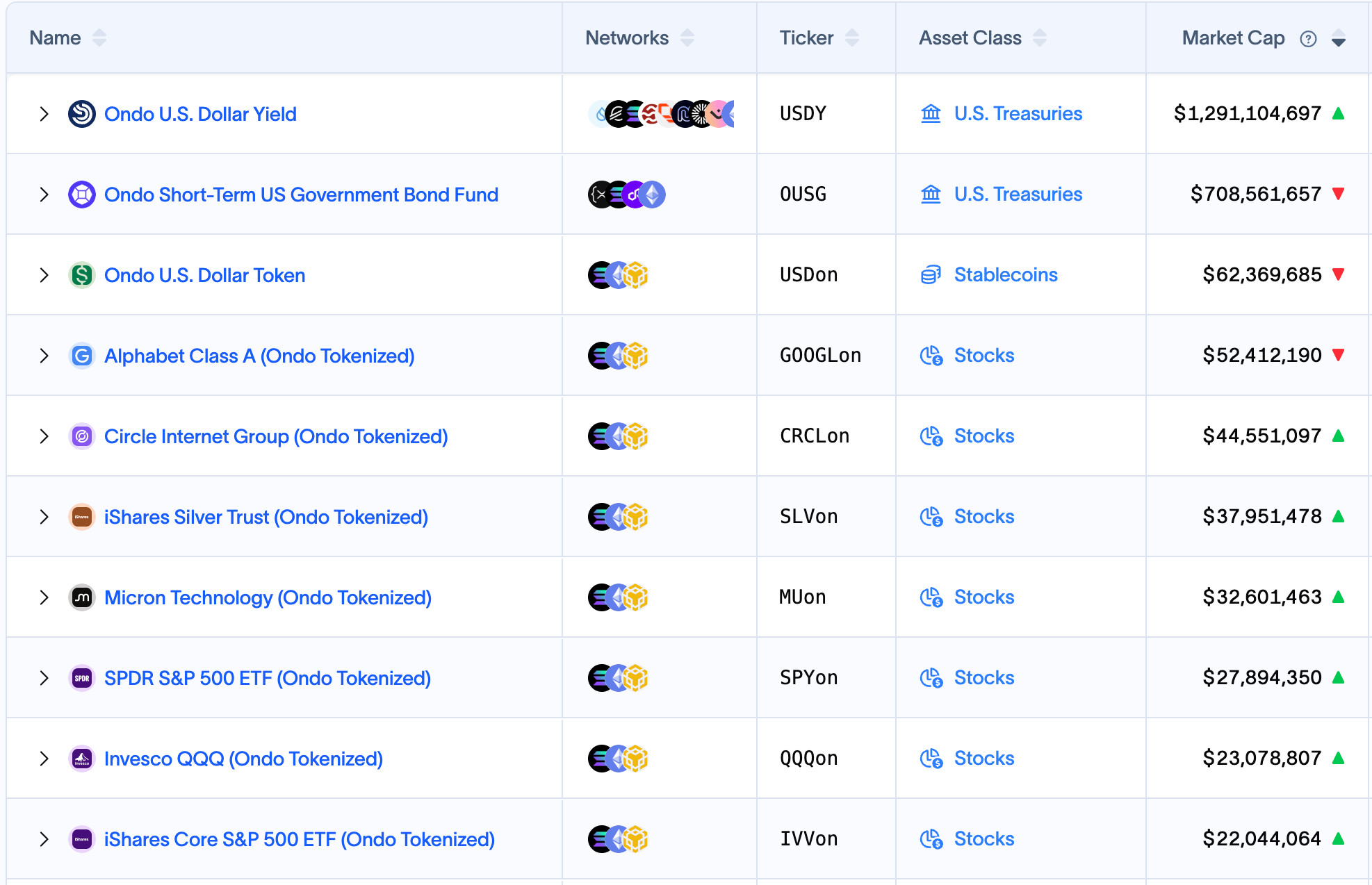
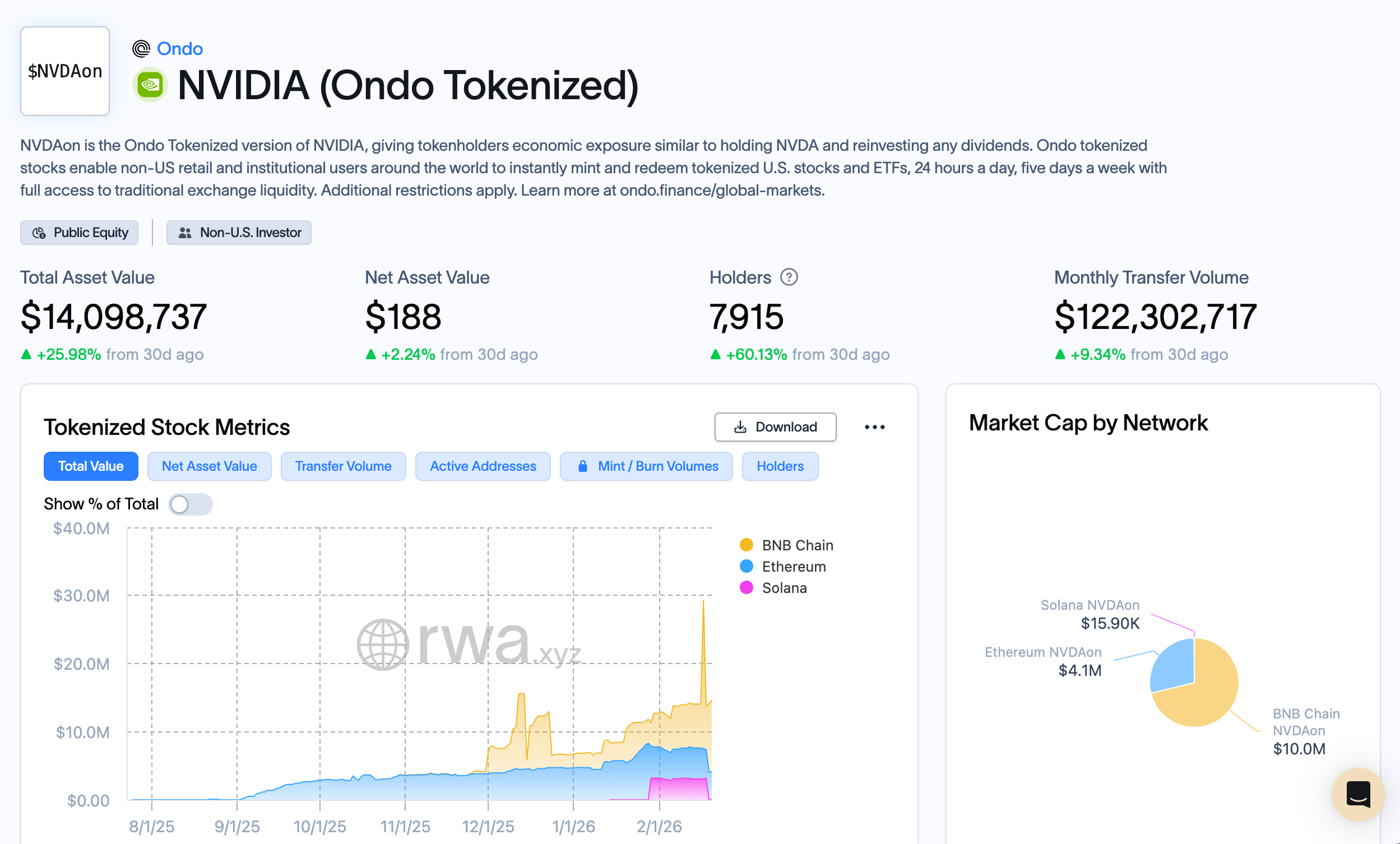
Take tokenized NVIDIA as a concrete example. It may not be the largest holding by TVL, but its holder count and transfer volume have both climbed meaningfully over the last 30 days — a signal that Ondo is gaining momentum and, more importantly, filling a real gap for investors.
Getting in is straightforward: head to Ondo Finance, buy directly with USDC, no intermediaries, on Ethereum mainnet. Trades settle instantly — no waiting for market open, no cut-off times, no Monday morning scramble if something moves over the weekend.
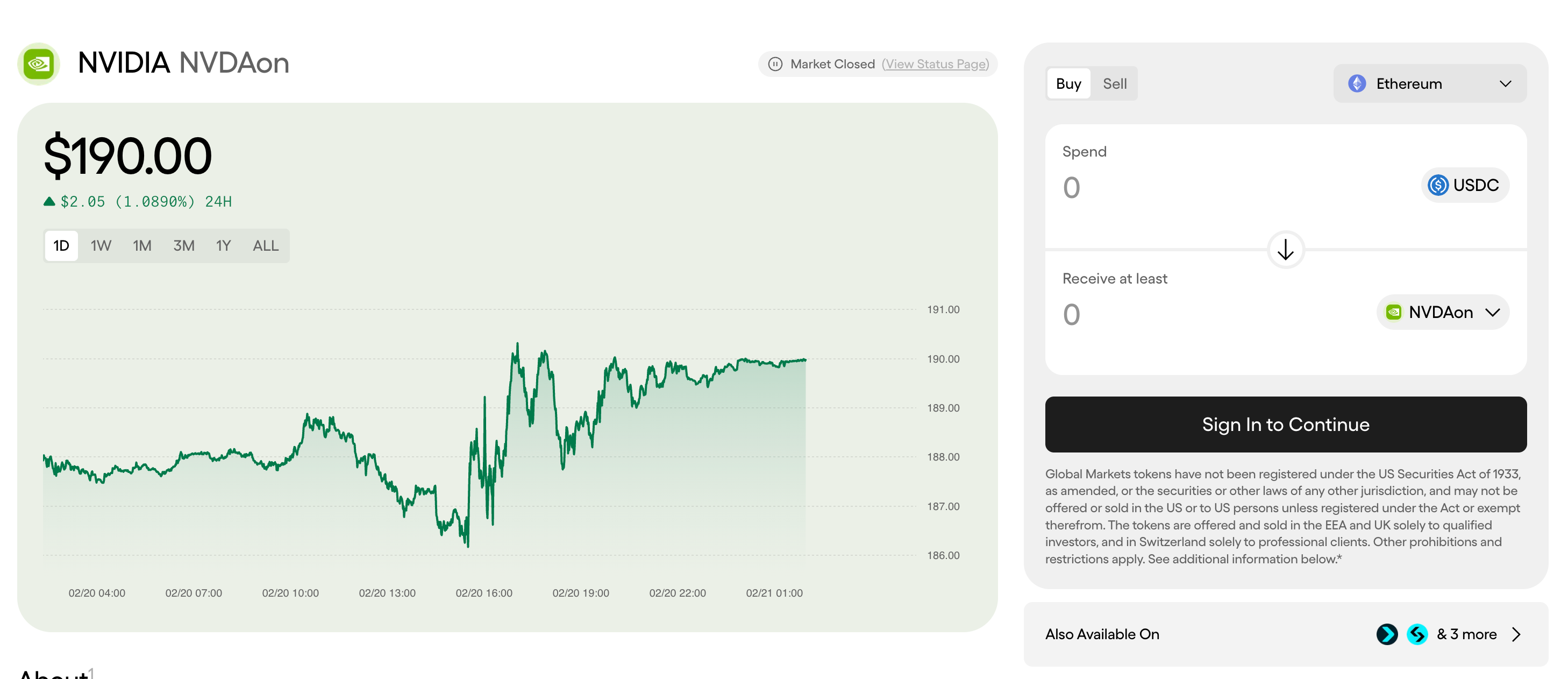
That last point is where tokenized stocks genuinely outshine their Web2 counterparts. Traditional brokerages lock you into fixed hours, leaving you watching prices move without being able to act. Onchain markets don't care what day it is. It's worth noting that BlackRock clearly sees this too — their growing commitment to tokenized assets through the BUIDL fund isn't a side bet, it's a strategic signal about where capital markets are heading.
Stablecoins
Stablecoins are the backbone of Ethereum and decentralized finance, and I don’t think that point gets made enough. Whether you’re parking liquidity during a bear market, chasing yield across DeFi protocols, or simply moving value across borders without friction, stablecoins are the infrastructure everything else runs on. But not all of them are built equal.
The market is massive, $295.76B in total market cap, and right now it’s heavily concentrated. Tether and Circle’s USDC dominate the lion’s share, which raises legitimate questions about decentralization. That concentration is exactly why new entrants like Polaris are worth watching. They’re positioning themselves as a more decentralized alternative, and I’m genuinely curious to see what they bring to the table.
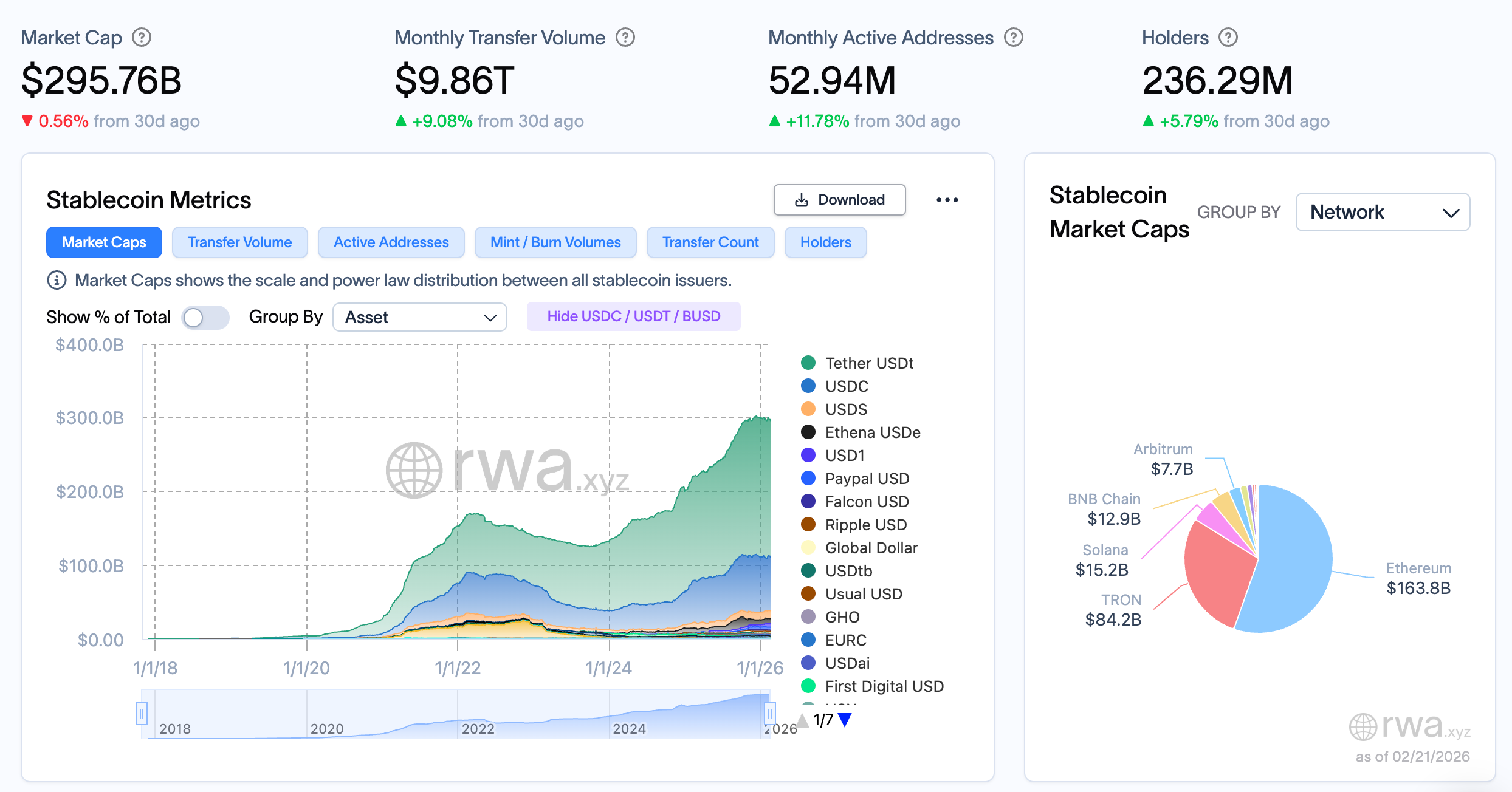
What’s also worth highlighting is how broad the demand actually is. Stablecoins aren’t just a tool for DeFi natives. Startups are using them to pay developers across the globe, institutions are quietly increasing their exposure, and the on-chain metrics reflect that growing appetite across the board.
On the DeFi side specifically, a few smaller players are making serious moves. USDS from the Sky ecosystem and Ethena’s USDe are emerging as strong alternatives, purpose-built for DeFi and gaining traction fast. These are the projects worth keeping an eye on as the stablecoin landscape continues to mature.
Stablecoins deserve a place in every portfolio, not just for DeFi natives but for anyone who understands what’s at stake. Internet money is freedom. You can deploy capital across protocols like AAVE or Pendle, generate yields that most traditional banks simply can’t compete with, and maintain full control over your assets around the clock.
The utility here is hard to overstate. Stablecoins act as a hedge against a banking system that has repeatedly shown its limitations, offering an alternative layer of financial infrastructure that doesn’t ask for permission. The centralization concern is real and worth acknowledging, most of the dominant stablecoins today carry meaningful counterparty risk. But the direction of travel is encouraging. Demand for censorship-resistant money is growing globally, and that pressure will keep pushing the ecosystem toward more decentralized solutions over time.
Commodities
Commodities represent one of the most underrated opportunities in the onchain RWA space. At $7.03B in market cap, the category is still small relative to stablecoins, but the growth trajectory is hard to ignore. Over the last few months, as crypto markets pulled back, tokenized commodities quietly gained momentum, a sign that investors are looking for onchain assets that move independently from the broader market.
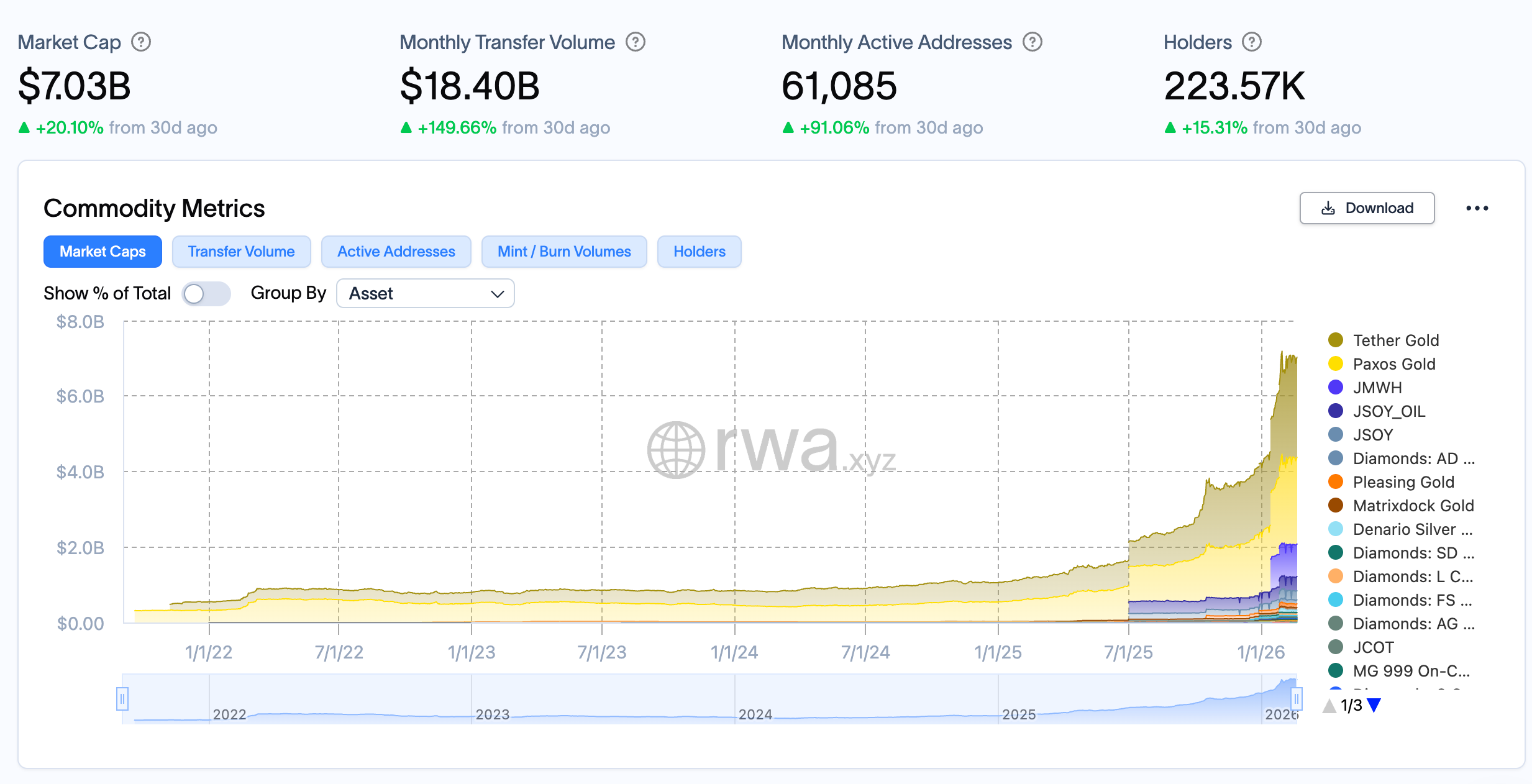
The space is still early and concentrated, with Tether and Paxos leading the pack. Gold dominates by a wide margin, but Oil, Silver, and even Diamond are carving out meaningful presence and growing fast.
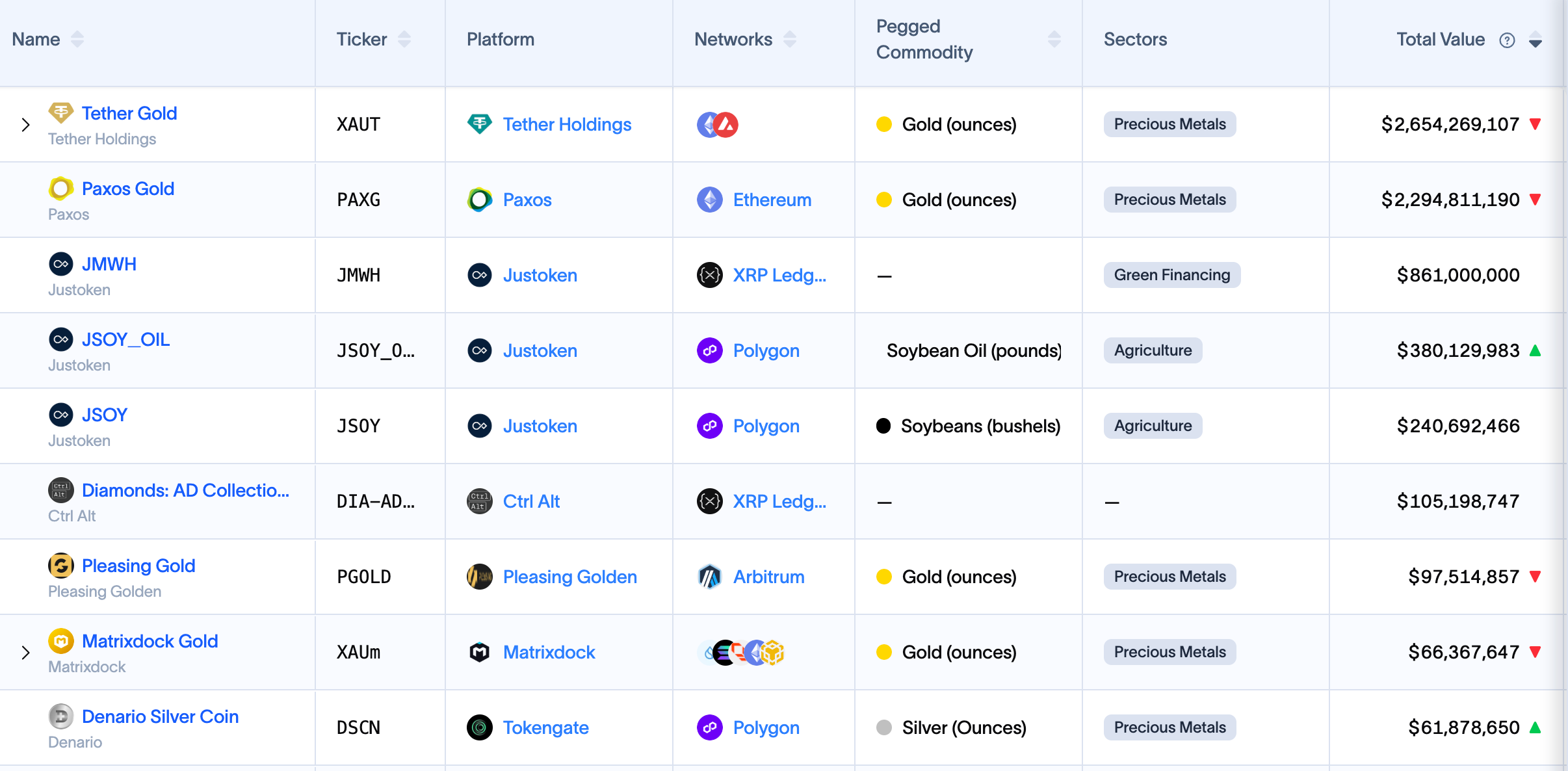
From a portfolio perspective, tokenized gold makes a compelling case for itself. It gives you exposure to one of the oldest stores of value in history while keeping you fully onchain, no custodians, no brokerage accounts, no friction. In the context of a new financial system being built in real time, that matters. I expect the commodity market to roughly triple over the coming year, closing the gap with stablecoins enough that it starts commanding serious attention from both DeFi natives and traditional investors alike.
My take on RWA
The world is moving onchain, and the momentum behind RWA makes that clearer than ever. Tokenized stocks, stablecoins, commodities, and real estate are all growing in adoption for the same fundamental reason: you get access to global markets around the clock, and you can put those assets to work across any protocol you choose. This is what money legos actually looks like in practice.

The opportunity for builders here is enormous. Open protocols mean anyone can come and create on top of these assets without asking for permission, something the traditional banking system has never been willing to offer. Decades in, that system has grown increasingly closed and innovation has stalled. The new generation has a real chance to rewire that, connecting global markets and building products that would have been unimaginable a few years ago.
The democratization angle is just as significant. Buying a single share of Apple was out of reach for most people in developing countries, let alone real estate or gold. Fractional ownership changes that equation entirely, opening up investment access to anyone with an internet connection and a wallet.
From a portfolio standpoint, RWA brings something crypto has always struggled to offer: stability and diversification without having to step offchain. It hedges against volatility while keeping you inside a composable, permissionless financial system.
The infrastructure of global finance is being rebuilt in the open. RWA is not a niche, it is the backend of what comes next.
Onchain Analytics 🧐
This section is usually where I share my own onchain investigations, the kind of digging that helps me position myself better in DeFi. It keeps me sharp, and sharing the process openly is part of what keeps me motivated to go deeper. Today though, I’m taking a different approach. Instead of an investigation, I want to walk you through the analytics tools I rely on for my research.
#1 Growthepie
Growthepie is my go-to for fundamental metrics across Ethereum and L2s. When it comes to positioning yourself for the medium to long term, fundamentals matter more than most people admit. Is a chain actually gaining momentum? Are wallets genuinely active, or just inflated by incentives? What does the revenue picture look like?
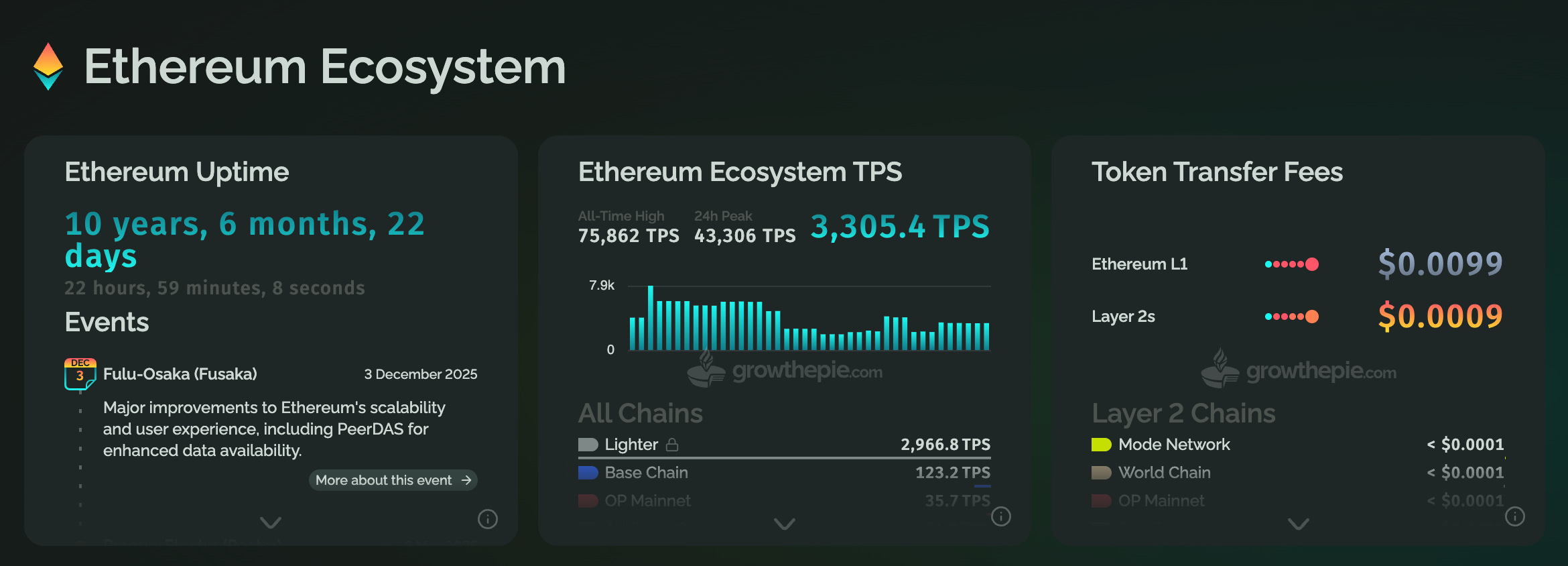
I’ll be honest, I’m not particularly bullish on L2 governance tokens as investments right now. But that’s not why I use Growthepie. I use it to track where liquidity is moving, so I can follow it early rather than show up late to a narrative that’s already played out.
#2 DeFiLlama
DeFiLlama is one of the most well-known open source analytics tools in the space, but most people only scratch the surface with it. Beyond TVL and general DeFi metrics, I use it heavily for airdrop research. Their dashboard for protocols without a token yet is genuinely underrated. Filter by TVL, focus on the mid to high range, and you start uncovering real opportunities to position yourself before a token even exists.
It sits firmly in my top three analytics tools for that reason alone
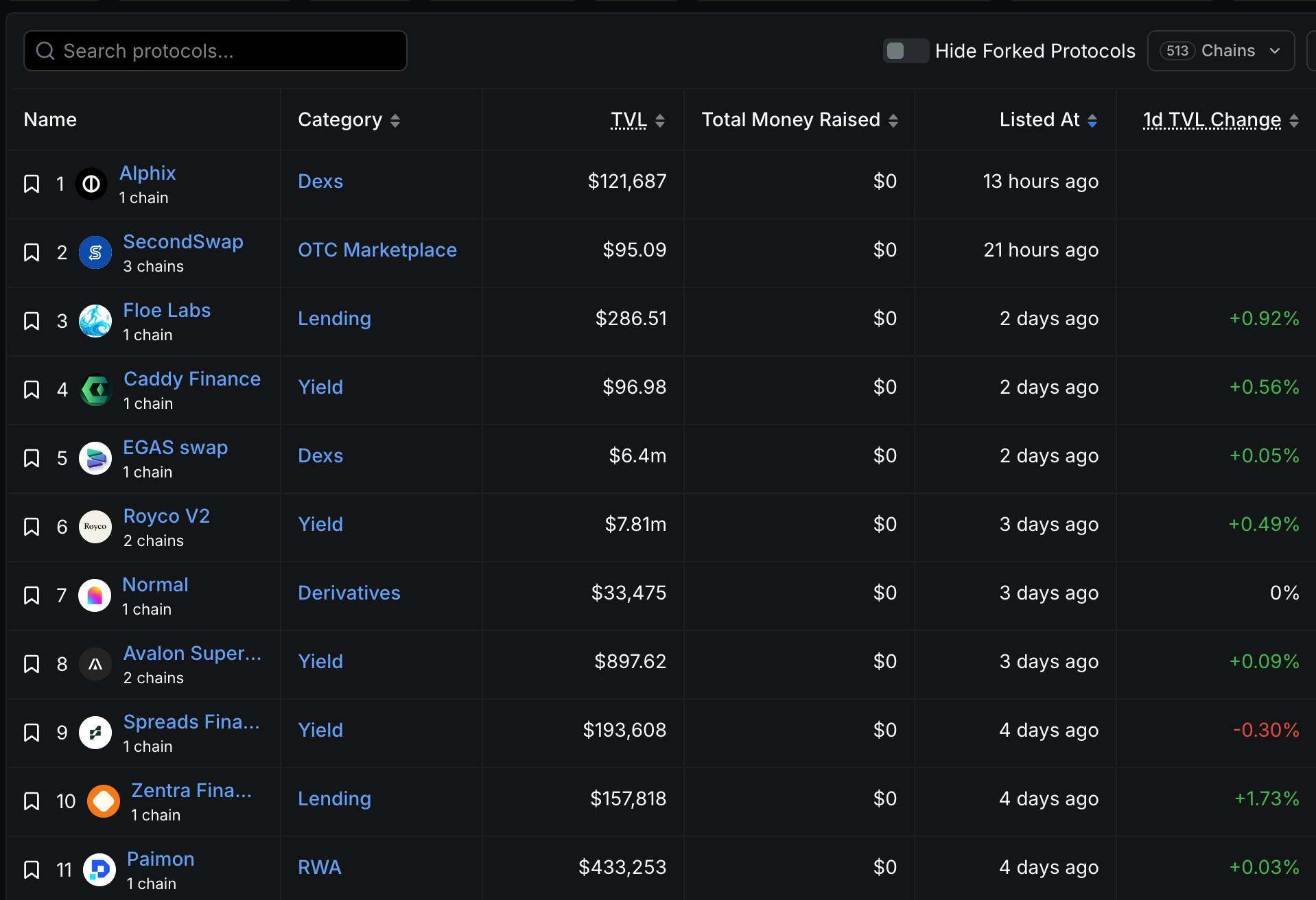
What I don’t see talked about enough is the API. I’m currently building my own app to streamline research for this newsletter, and the DeFiLlama API has been central to that workflow, pulling exactly the metrics I need directly into my own ecosystem, completely free. That kind of open, accessible infrastructure is exactly what public goods for Ethereum should look like, and DeFiLlama is one of the best examples of it.
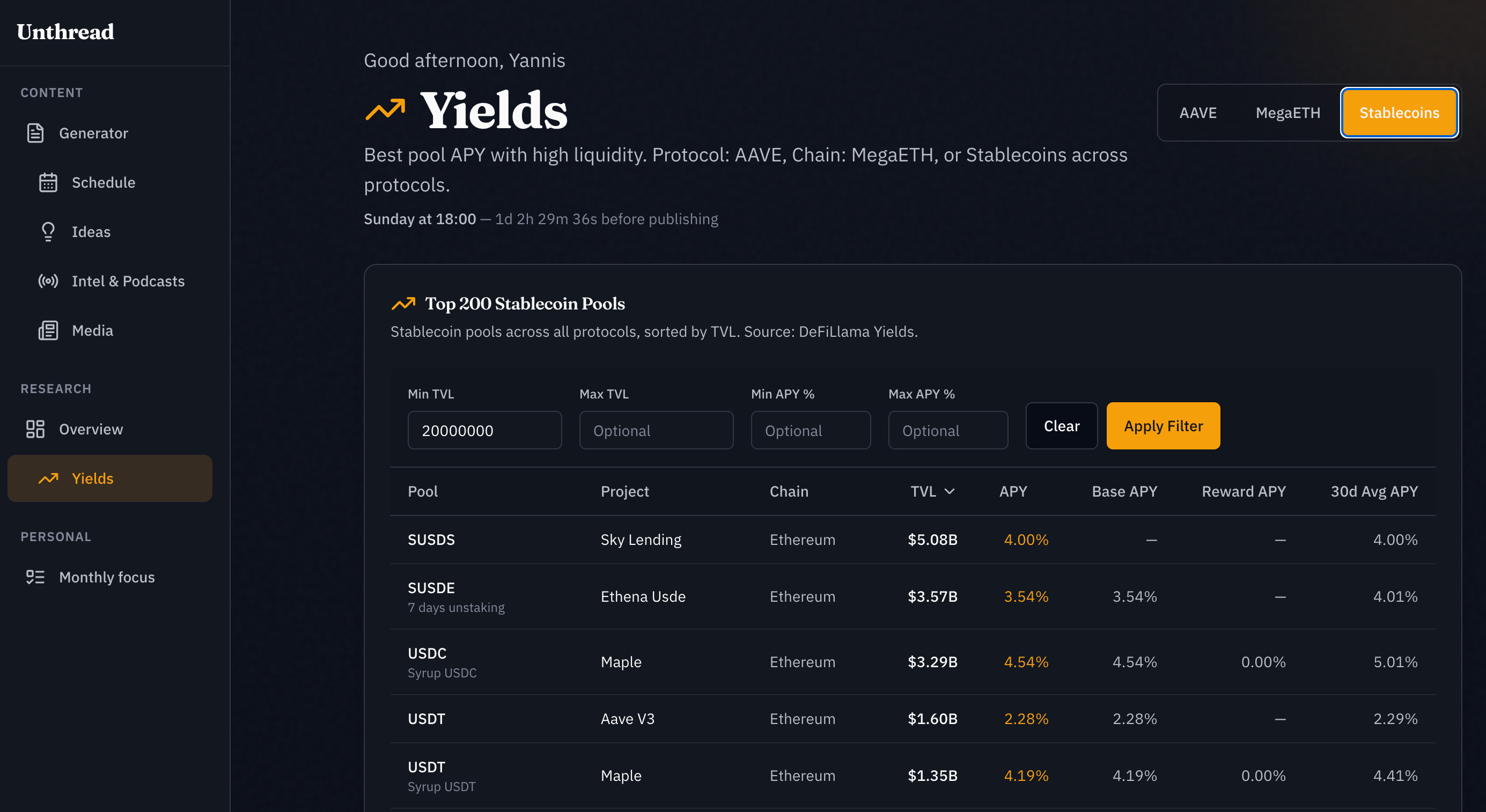
If you're serious about DeFi research and not yet using DeFiLlama, start there. It's free, open source, and deep enough to support everything from casual portfolio tracking to the kind of systematic research that gives you a real edge.
#3 Token Terminal
Token Terminal is where I go when I want to go deep. It's less of a quick-check tool and more of a research environment, covering everything from RWA to lending, derivatives, and well beyond. If you learn how to read what it's telling you, it gives you a genuine edge over most market participants.
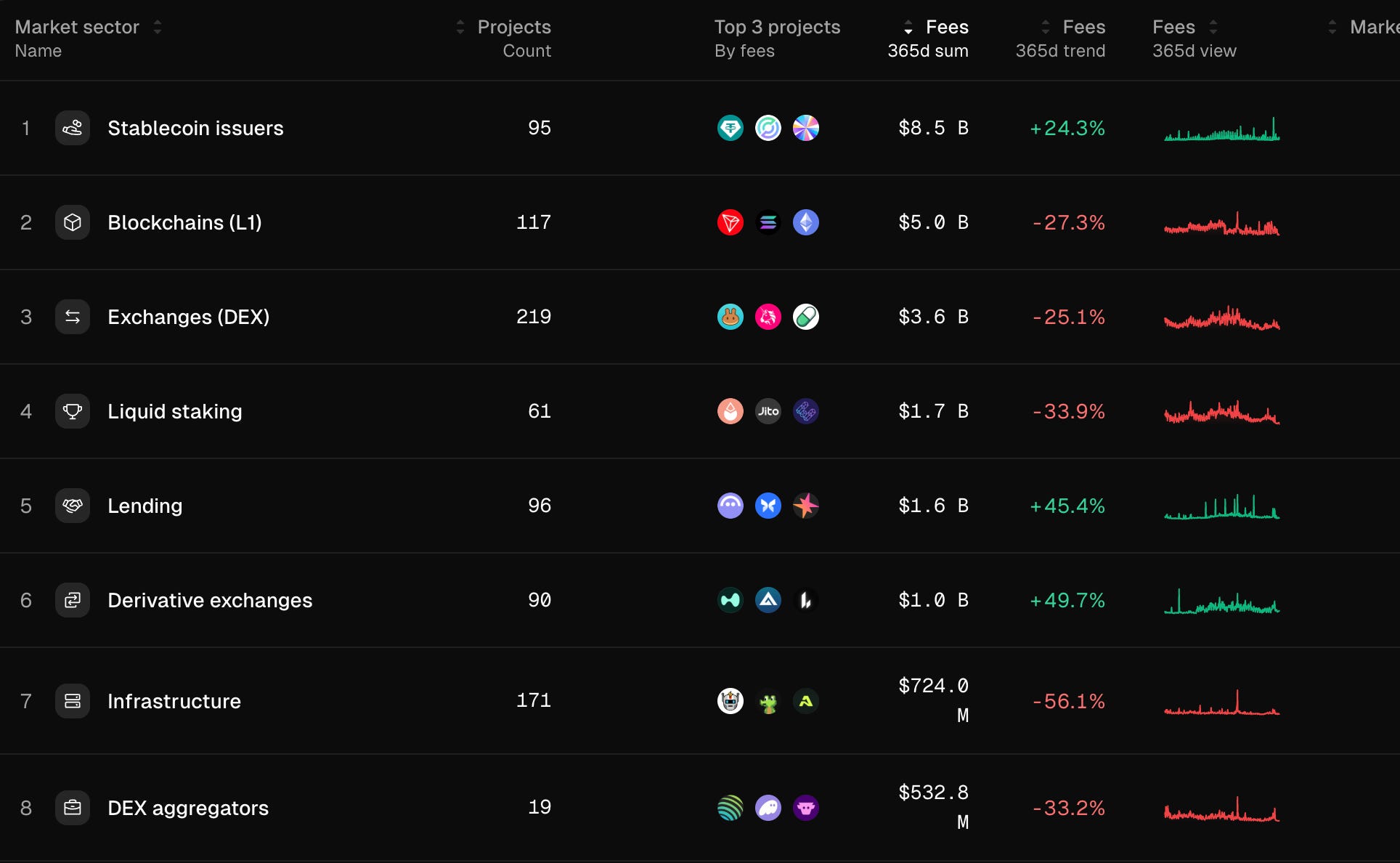
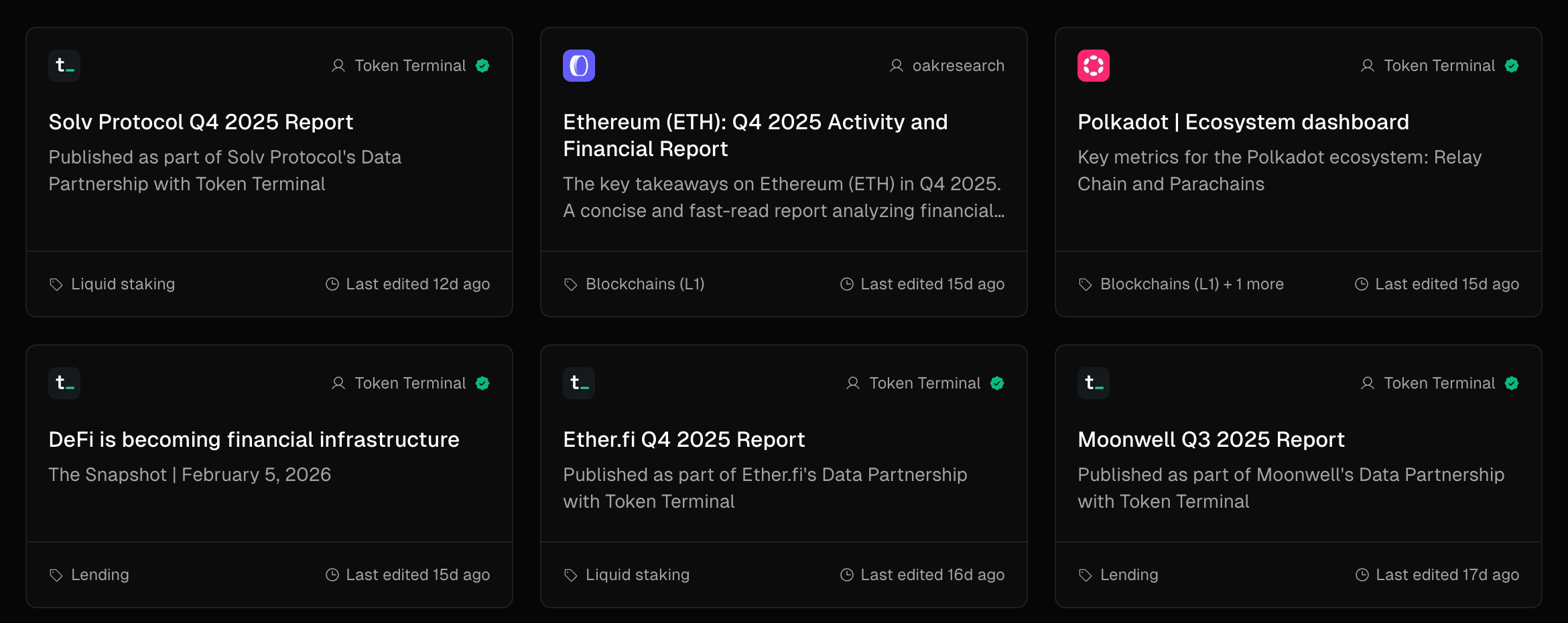
The reports are another highlight. Well-written, thorough, and particularly valuable if you're investing in DAOs or want a clearer picture of protocol fundamentals. I tend to read them on a quiet Sunday after publishing the newsletter, and they consistently spark ideas for the week ahead.
These three tools are a strong foundation for anyone looking to get serious about onchain analytics. I rely on other, more technical resources too, Dune Analytics and some of the Blockworks data among them, but those deserve their own dedicated breakdown. Let me know in the comments if that's something you'd want to see in a future edition.
That’s it for this week.
If you found this edition valuable, please consider sharing it with your network — it helps grow our community and keeps the alpha flowing.
None of the information in this newsletter constitutes financial advice. While I personally use most of the protocols that I discuss, it's important to understand that they involve substantial risk. Don’t invest what you can’t afford to lose
I love it.
good breakdown. the tokenized stocks part especially